
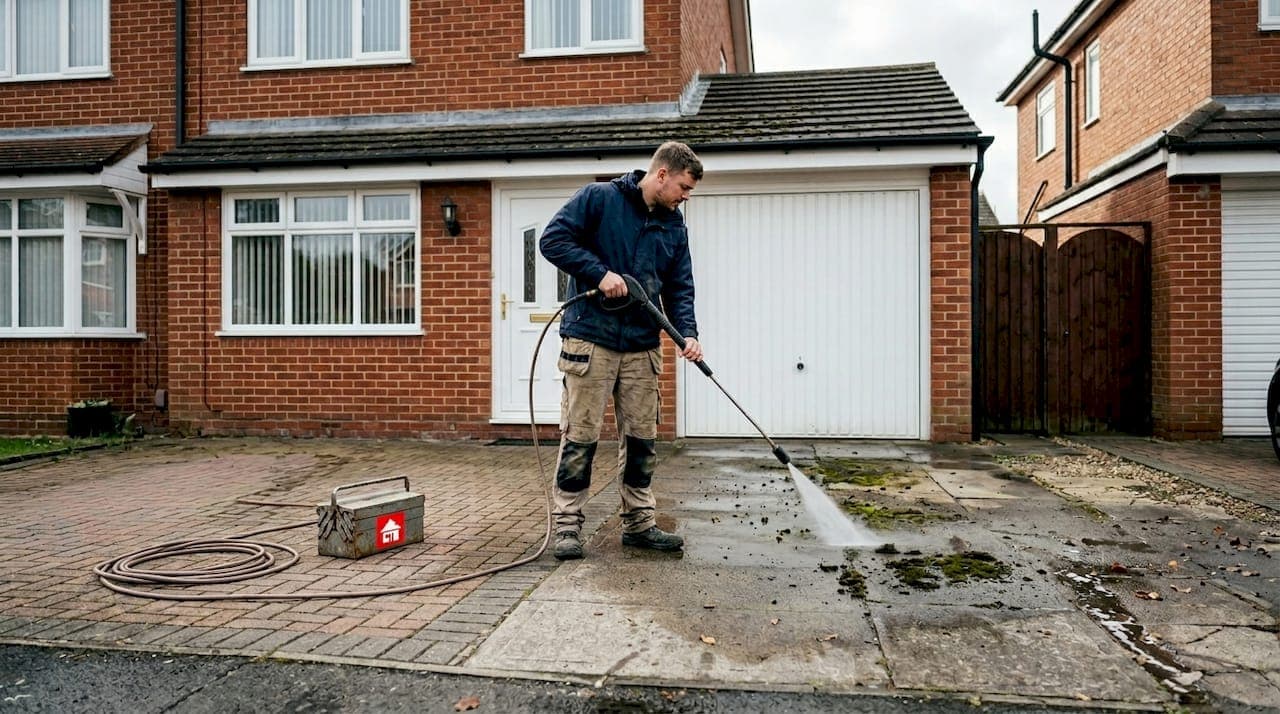
Many property owners in Newcastle confuse pressure washing with simple garden hose cleaning or assume all high-pressure methods are the same. Pressure washing is actually a specialized technique using powerful motorized equipment to deep clean hard surfaces like driveways, patios, and brick walls. This guide explains exactly what pressure washing involves, how it differs from soft washing, and why it matters for maintaining your Newcastle property against coastal environmental challenges. You'll learn safe practices, professional considerations, and when to choose pressure washing versus gentler alternatives for different surfaces around your home or commercial building.
Table of Contents
- Key takeaways
- What is pressure washing and how does it work?
- Pressure washing vs soft washing: which is right for your property?
- Why pressure washing matters for Newcastle homes and commercial properties
- DIY pressure washing risks and why hiring professionals is safer
- Enhance your property's look with professional painting and cleaning services
- Frequently asked questions about pressure washing
Key Takeaways
| Point | Details |
|---|---|
| Pressure washing basics | Pressure washing uses 1,300 to 4,000 PSI to dislodge dirt and stains from hard surfaces like concrete, brick, and stone. |
| Soft washing contrast | Soft washing uses low pressure with cleaning solutions to remove organic growth on delicate surfaces for longer lasting results. |
| Best surfaces | Durable non porous surfaces such as concrete driveways, brick walls, stone patios, metal fencing, and vinyl siding respond well to pressure washing. |
| Safety and testing | Always test pressure settings on an inconspicuous area and start with wider spray patterns and lower pressure to avoid damage. |
What is pressure washing and how does it work?
Pressure washing uses a high-pressure water spray (typically 1,300-4,000 PSI) from a motorized pump to dislodge and remove dirt, grime, mold, algae, and stains from hard surfaces. The equipment forces water through a specialized nozzle at tremendous force, creating a concentrated stream that breaks the physical bonds holding contaminants to surfaces. This mechanical action flushes out pores in materials like concrete and brick, reaching deep into surface textures where brushes and regular hoses cannot penetrate.
The effectiveness depends on two technical specifications working together. Pressure, measured in pounds per square inch (PSI), determines the force hitting the surface. Flow rate, measured in gallons per minute (GPM), controls how much water moves contaminants away. A typical residential pressure washer operates between 1,300 and 2,800 PSI with flow rates around 1.4 to 2.5 GPM, while commercial units push 3,000 to 4,000 PSI for industrial applications.
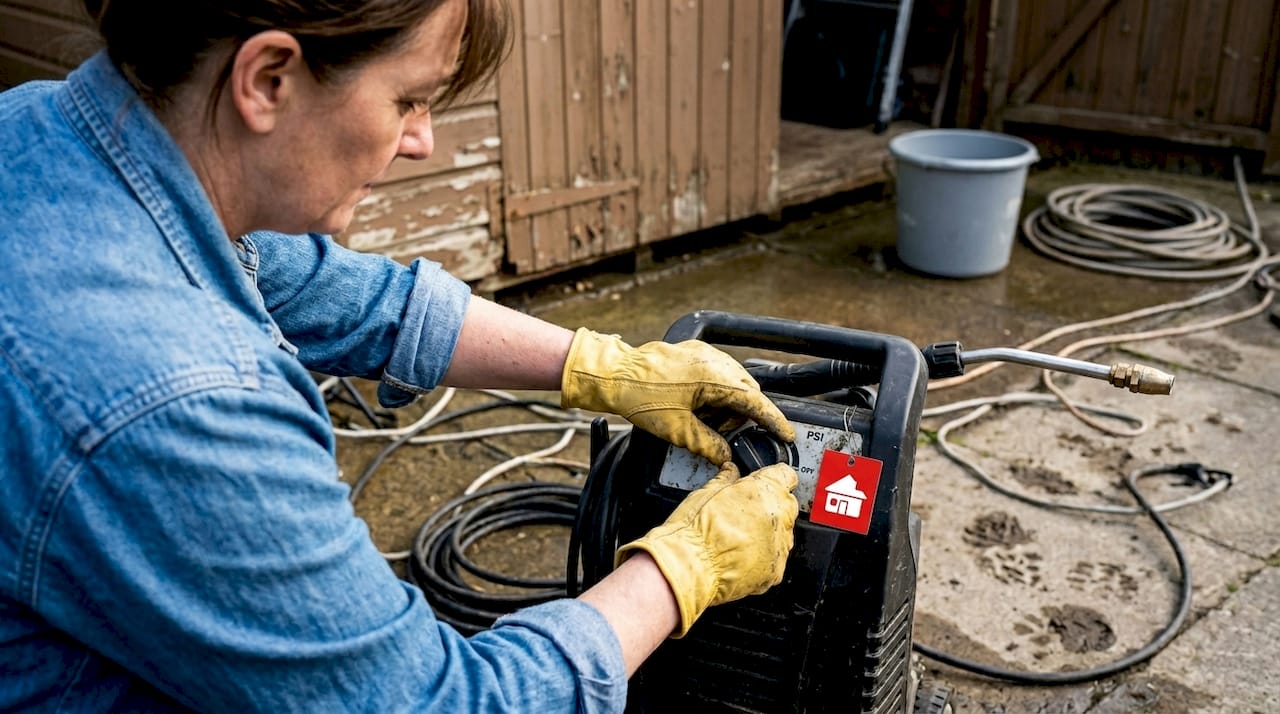
The motorized pump draws water from a standard garden hose connection and amplifies pressure through internal mechanisms. Different nozzle tips create spray patterns ranging from narrow zero-degree jets for stubborn stains to wide 40-degree fans for general cleaning. Red nozzles deliver zero-degree pinpoint streams, yellow provides 15-degree concentrated cleaning, green offers 25-degree medium coverage, and white creates 40-degree gentle washing.
Pressure washing excels on durable, non-porous surfaces that withstand high force:
- Concrete driveways and walkways
- Brick walls and pavers
- Stone patios and retaining walls
- Metal fencing and railings
- Vinyl siding and composite decking
Before pressure washing before painting, understanding equipment basics ensures safe operation. The pump requires proper water supply to prevent damage, and operators must maintain correct distance from surfaces to avoid etching or gouging. Starting with wider spray patterns and lower pressures allows testing before increasing intensity.
Pro Tip: Always test pressure settings on an inconspicuous area first, starting at least three feet away from the surface and gradually moving closer until you find the optimal cleaning distance that removes grime without damaging the material.
Pressure washing vs soft washing: which is right for your property?
Soft washing represents a fundamentally different approach to exterior cleaning, using low-pressure water combined with specialized cleaning solutions to remove organic growth and stains. Where pressure washing relies on mechanical force, soft washing kills organics at root for longer results on delicate surfaces. The chemical solutions in soft washing penetrate beneath surface stains to eliminate mold, mildew, and algae at their source, preventing regrowth for months or years rather than just removing visible growth.
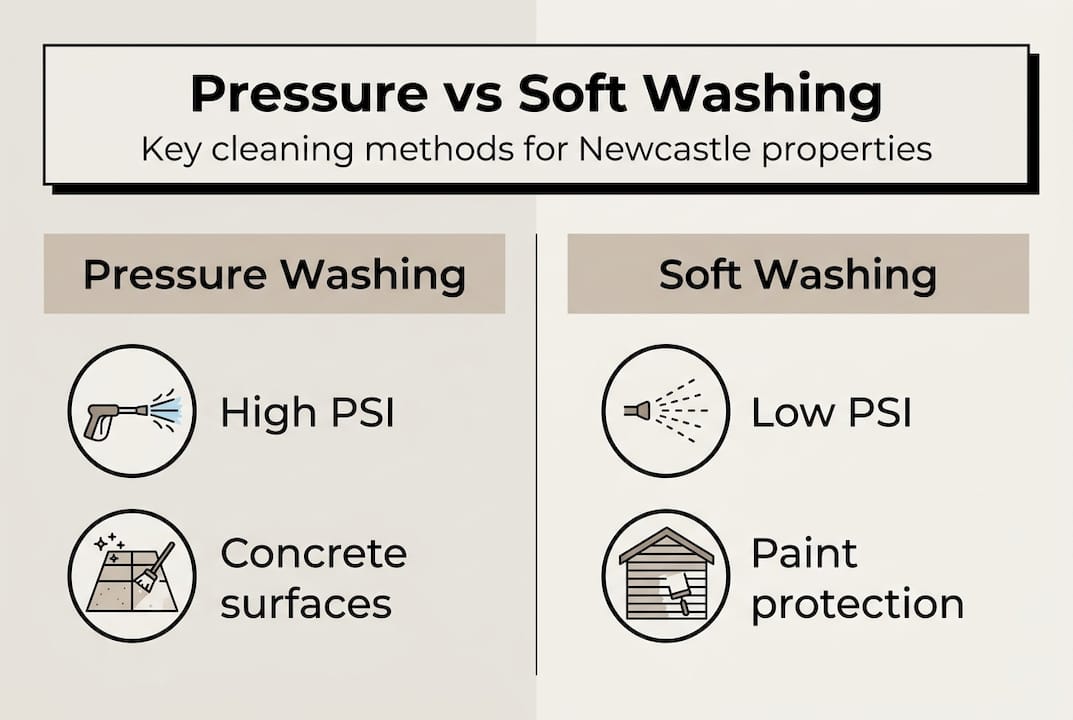
The pressure difference between methods is dramatic. Soft washing operates at 100 to 500 PSI, roughly equivalent to a standard garden hose with a spray nozzle, while pressure washing blasts surfaces at 1,300 to 4,000 PSI. This gentler approach protects painted surfaces, timber, roof shingles, and other materials that high pressure could damage or strip.
| Feature | Pressure Washing | Soft Washing |
|---|---|---|
| PSI Range | 1,300-4,000 | 100-500 |
| Best Surfaces | Concrete, brick, stone, metal | Painted wood, roofs, siding, stucco |
| Cleaning Action | Mechanical force breaks bonds | Chemicals kill organic growth |
| Typical Uses | Driveways, patios, walkways | House exteriors, roofs, fences |
| Longevity | 6-12 months | 12-24 months |
Newcastle's coastal environment makes this distinction particularly important. Salt spray, high humidity, and consistent moisture create ideal conditions for algae and mold growth on painted timber and rendered surfaces. Pressure washing these delicate materials risks stripping paint, gouging timber grain, or forcing water beneath protective coatings where it causes rot and deterioration.
Soft washing protects your investment in painting services in Newcastle by cleaning without compromising surface integrity. The biodegradable cleaning solutions used in professional soft washing break down organic matter while remaining safe for plants, pets, and surrounding landscapes when properly applied and rinsed.
Choosing the right method depends on surface material and contamination type:
- Use pressure washing for oil stains on concrete driveways
- Choose soft washing for mold on painted weatherboard homes
- Apply pressure washing to brick pavers with embedded dirt
- Select soft washing for algae-covered roof tiles
- Employ pressure washing for graffiti on masonry walls
Pro Tip: Many properties benefit from combining both methods during comprehensive cleaning. Pressure wash hard horizontal surfaces like driveways and pathways, then soft wash vertical painted surfaces and roofing to achieve thorough property-wide cleanliness without risking damage to vulnerable materials.
Why pressure washing matters for Newcastle homes and commercial properties
Newcastle's coastal location exposes properties to accelerated surface degradation from environmental factors that inland areas rarely face. Saline air carries microscopic salt particles that settle on every exterior surface, attracting moisture and promoting corrosion on metal, degradation of paint, and organic growth on porous materials. Combined with urban pollutants from traffic and industry, this creates a persistent film of grime that standard rain cannot wash away.
Annual pressure washing for driveways and patios combats salt and oil buildup that accelerates concrete deterioration and creates safety hazards. Oil from vehicles bonds with concrete pores, creating slippery surfaces and dark staining that only high-pressure water can fully remove. Salt deposits draw moisture into concrete, where freeze-thaw cycles in winter months cause cracking and spalling that reduces surface lifespan by years.
Soft washing house exteriors protects paint and timber from coastal damage that pressure washing might worsen. The combination of salt, moisture, and organic growth creates a perfect environment for paint failure and timber rot. Soft washing removes these threats without stripping protective coatings, extending the time between necessary repainting from three to four years up to seven to eight years with proper maintenance.
Commercial properties face additional considerations beyond residential maintenance. Customer perception links directly to exterior cleanliness, with grimy storefronts and stained walkways suggesting neglect that drives potential clients to competitors. Regular pressure washing maintains professional appearance while preventing slip hazards from algae-covered surfaces that create liability exposure.
Recommended maintenance intervals for Newcastle properties:
- Driveways and concrete surfaces: every 12 to 18 months
- House exteriors and painted surfaces: every 18 to 24 months via soft washing
- Commercial walkways and entries: every 6 to 12 months
- Timber decks and fencing: every 12 to 18 months before resealing
- Roof cleaning: every 24 to 36 months depending on tree coverage
Preventing damage proves far more cost-effective than repairing neglect. A driveway pressure washing service costs a few hundred dollars, while replacing deteriorated concrete runs into thousands. Similarly, regular soft washing preserves your investment in house preparation before painting, preventing premature paint failure that requires complete repainting years ahead of schedule.
Pro Tip: Professional pressure washing services in Newcastle understand local EPA wastewater regulations and use proper capture systems to prevent contaminated runoff from entering stormwater systems. This compliance protects local waterways while avoiding potential fines that DIY cleaning might trigger if runoff contains cleaning chemicals or collected pollutants.
DIY pressure washing risks and why hiring professionals is safer
Homeowners renting or purchasing pressure washers often underestimate the damage potential these powerful tools carry. Using excessive PSI settings, incorrect nozzle angles, or improper distance from surfaces causes irreversible harm that costs more to repair than professional cleaning would have cost initially. DIY risks exceed cleaning costs when operators lack experience judging appropriate pressure for different materials.
Common mistakes that damage property include holding the spray too close to surfaces, creating gouges in timber or etching in concrete. Using zero-degree nozzles on painted surfaces strips coatings in seconds. Directing high-pressure streams at windows cracks glass or forces water past seals into wall cavities where moisture causes mold and rot. Pressure washing upward under siding or roof edges drives water behind protective barriers, creating hidden damage that manifests months later as interior water stains or structural decay.
Health and safety risks extend beyond property damage. Pressure washer kickback from high-force spray can cause operators to lose balance and fall from ladders or scaffolding. The high-pressure stream itself cuts skin and injects bacteria or debris beneath the surface, requiring immediate medical attention to prevent serious infection. Without proper personal protective equipment like safety goggles, face shields, and closed-toe boots, operators risk eye injuries from debris and foot injuries from dropped equipment or misdirected spray.
Environmental concerns make DIY pressure washing legally problematic in many situations. Wastewater from pressure washing contains removed contaminants like oil, grease, paint chips, mold spores, and chemical residues that cannot legally flow into storm drains in most municipalities. Professional services use vacuum recovery systems or containment berms to capture runoff for proper disposal, while DIY operators typically let contaminated water flow wherever gravity takes it, potentially triggering EPA violations and fines.
Understanding cleaning units provides better equipment selection than focusing solely on PSI. Cleaning Units equal PSI multiplied by GPM, giving a more accurate measure of cleaning effectiveness. A 2,000 PSI washer with 2.0 GPM produces 4,000 cleaning units, while a 3,000 PSI model with 1.5 GPM generates only 4,500 cleaning units despite 50% higher pressure. The higher flow rate often cleans more effectively than higher pressure alone.
Reasons to hire professional pressure washing services:
- Professionals match equipment specifications to surface requirements, preventing damage from excessive force
- Licensed operators carry insurance covering accidental property damage during cleaning
- Professional teams complete large jobs in hours rather than full weekends of DIY effort
- Experts identify surfaces requiring soft washing instead of pressure washing before damage occurs
- Commercial services provide EPA-compliant wastewater management and disposal
- Trained technicians recognize signs of underlying problems like rot or structural issues during cleaning
Professional pressure washing services understand the balance between cleaning power and surface protection. They adjust pressure settings throughout the job as surface conditions change, something inexperienced operators rarely do. When preparing surfaces for painting, professionals know exactly how much pressure removes contaminants without damaging substrate integrity that paint adhesion requires.
Pro Tip: Before hiring any pressure washing service, verify they carry both general liability insurance and workers compensation coverage. Ask about their wastewater management procedures and whether they're familiar with local environmental regulations. These questions separate professional operations from casual operators using rented equipment.
Enhance your property's look with professional painting and cleaning services
Professional painters recognize that surface preparation determines paint longevity more than any other factor. That's why expert painters in Charlestown incorporate thorough pressure washing into their preparation process, removing contaminants that prevent proper paint adhesion. Clean surfaces allow primers and paints to bond directly with substrate materials rather than sitting atop layers of dirt, salt, and organic growth that eventually cause premature failure.

4 Elements Painting combines exterior cleaning expertise with professional painting services throughout Newcastle and surrounding regions. Our team understands coastal environment challenges and uses appropriate pressure settings and cleaning methods for different surface materials. We handle everything from initial assessment through final coating application, ensuring your property receives comprehensive care that maximizes appearance and protection.
Our services extend beyond residential properties to commercial buildings and strata complexes requiring coordinated maintenance schedules. We work with property managers to plan cleaning and painting during optimal weather windows, minimizing disruption to tenants and businesses. Our commercial painting services Newcastle include detailed preparation protocols that address the larger scale and higher durability requirements of commercial applications.
Key advantages of integrated cleaning and painting services:
- Single contractor accountability eliminates coordination headaches between separate cleaning and painting teams
- Comprehensive surface assessment identifies problems before they become expensive repairs
- Professional-grade equipment and materials deliver superior results compared to DIY approaches
- Full insurance coverage protects your property throughout the service process
- Environmental compliance ensures proper handling of wastewater and paint materials
Whether you need standalone pressure washing to refresh your property's appearance or complete exterior renovation including cleaning, repairs, and painting, professional services deliver lasting value. Our detailed pressure washing before painting guide explains how proper preparation extends coating life and enhances final appearance, protecting your investment for years beyond what shortcuts achieve.
Frequently asked questions about pressure washing
What exactly is pressure washing?
Pressure washing is a cleaning method that uses a motorized pump to spray water at 1,300 to 4,000 PSI through specialized nozzles, creating force that breaks bonds between surfaces and contaminants. The high-pressure stream removes embedded dirt, grime, mold, and stains from durable materials like concrete, brick, and stone more effectively than scrubbing or regular hoses.
How often should Newcastle properties be pressure washed?
Newcastle's coastal environment requires pressure washing driveways and concrete surfaces every 12 to 18 months to combat salt and oil buildup. House exteriors should receive soft washing every 18 to 24 months to protect paint and timber from moisture and organic growth. Commercial properties with high foot traffic benefit from cleaning every 6 to 12 months to maintain professional appearance and safety.
Can I safely pressure wash my own property?
DIY pressure washing carries significant risks including property damage from excessive pressure, personal injury from equipment kickback or spray force, and environmental violations from improper wastewater management. Without experience judging appropriate PSI settings and nozzle selection for different materials, homeowners often cause damage costing more than professional services. Hiring licensed, insured professionals ensures safe, effective cleaning with proper EPA compliance.
What's the difference between pressure washing and soft washing?
Pressure washing uses 1,300 to 4,000 PSI mechanical force to clean hard surfaces, while soft washing applies 100 to 500 PSI with specialized chemicals that kill organic growth at its source. Pressure washing suits concrete, brick, and stone, while soft washing protects painted surfaces, timber, and roofing from damage. Soft washing results last 12 to 24 months compared to 6 to 12 months for pressure washing because chemicals prevent regrowth rather than just removing visible contamination.
Why is pressure washing especially important for Newcastle properties?
Coastal air deposits salt particles on all exterior surfaces, attracting moisture and accelerating deterioration of concrete, metal, paint, and timber. Combined with urban pollutants and high humidity promoting mold and algae growth, Newcastle properties face contamination that inland areas rarely experience. Regular pressure washing and soft washing remove these threats before they cause permanent damage, extending surface life and maintaining property value in challenging environmental conditions.
Should I pressure wash before painting my house?
Professional painters always pressure wash or soft wash surfaces before painting because contaminants prevent proper paint adhesion. Clean surfaces allow primers and topcoats to bond directly with substrate materials, dramatically extending coating life compared to painting over dirt, salt, and organic growth. The preparation investment pays for itself through reduced maintenance frequency and superior long-term appearance and protection.