

Choosing paint for your coastal home often feels overwhelming, especially when terms like paint finish and sheen get thrown around interchangeably. Many homeowners assume all paints perform equally, only to discover peeling, fading, or mold within months of application. The reality is that paint finish, also known as paint sheen, refers to the level of gloss or shine on a painted surface, ranging from flat/matte (0-10% gloss) to high gloss (70-85%+), and selecting the wrong one in Newcastle's coastal climate can cost you thousands in premature repaints. This guide clarifies what paint finish truly means, how coastal conditions impact durability, and which sheens protect your investment best.
Table of Contents
- Understanding Paint Finish And Sheen Levels
- Why Paint Finish Matters In Coastal Environments
- Comparing Paint Sheens For Coastal Homes: Pros And Cons
- Expert Tips For Selecting And Maintaining Paint Finishes In Coastal Homes
- Professional Painting Services For Coastal Homes In Newcastle And Surroundings
- FAQ
Key takeaways
| Point | Details |
|---|---|
| Paint finish defines gloss level | Sheen ranges from flat (0-10% gloss) to high gloss (70-85%+), affecting durability and appearance. |
| Coastal environments demand specific finishes | Moisture, salt, and UV exposure require higher sheen paints like low sheen or satin for resistance. |
| Low sheen balances durability and aesthetics | Satin finishes hide flaws while resisting moisture better than flat paints in coastal homes. |
| Higher gloss improves cleanability | Semi-gloss and gloss paints form denser films that repel dirt and salt but highlight surface imperfections. |
| Proper prep extends paint lifespan | Surface preparation and UV-resistant formulas maximize coastal paint performance and reduce repainting frequency. |
Understanding paint finish and sheen levels
Paint finish determines how light reflects off your walls, but it's more than aesthetics. The gloss percentage measures reflectivity, with higher sheen paints having more reflective light and denser film from higher resin content, improving cleanability and resistance. Resin acts as the binder holding pigment particles together, and paints with more resin create tougher, shinier surfaces. Additives like UV stabilizers and mold inhibitors further enhance performance, especially critical for coastal applications.
Here's how common sheens break down by gloss percentage:
| Finish Type | Gloss Percentage | Typical Use |
|---|---|---|
| Flat/Matte | 0-10% | Low-traffic interior walls, ceilings |
| Low Sheen/Satin | 10-35% | Living rooms, bedrooms, exterior walls |
| Semi-Gloss | 35-70% | Kitchens, bathrooms, trim, doors |
| Gloss/High Gloss | 70-85%+ | Cabinets, furniture, high-moisture areas |
Each sheen level offers distinct advantages and tradeoffs:
- Flat/matte finishes hide surface imperfections beautifully but absorb moisture and stains, making them unsuitable for humid coastal rooms without excellent ventilation.
- Low sheen or satin provides moderate reflectivity, resists moisture better than flat, and conceals minor wall flaws while remaining washable.
- Semi-gloss reflects significant light, stands up to frequent cleaning, and works perfectly for trim or high-traffic areas, though it magnifies wall imperfections.
- Gloss finishes deliver maximum durability and moisture resistance but require flawless surface prep since every dent or ripple shows prominently.
Pro Tip: Understanding gloss units helps you match paint to room function. A bedroom benefits from low sheen's soft look, while a bathroom needs semi-gloss's moisture defense. When planning your exterior paint coats, sheen selection matters as much as coat quantity for long-term protection.
For comprehensive solutions across your property, explore interior and exterior painting services that factor in both sheen and application technique. Detailed guidance on paint finish types and interior paint sheen selection can deepen your understanding of how chemistry influences performance.
Why paint finish matters in coastal environments
Coastal living brings breathtaking views but brutal conditions for exterior and interior paint. Salt-laden air, relentless UV radiation, high humidity, and temperature swings create a perfect storm for paint degradation. In coastal environments like Newcastle, higher sheen finishes offer better durability due to tighter surface structure resisting moisture, salt, and mould. Flat paints absorb these elements like sponges, leading to discoloration, chalking, and premature failure.
The science backs this up dramatically. Coastal steel corrosion data shows severe rates, with paint systems rated 5/5 for UV/mould resistance offering best protection. While this research focused on steel structures, the principle applies directly to residential paint: coatings with tight molecular structures and UV-resistant additives survive coastal assault far longer than porous, low-resin formulas.
Coastal Pacific regions experience extreme corrosion rates up to 10 times higher than inland areas, making protective coatings with superior UV and mold resistance essential for structural longevity and aesthetic preservation.
Homeowners in Newcastle, Merewether, and Lake Macquarie face these specific challenges:
- Salt crystals embed in porous paint surfaces, drawing moisture and causing blistering or peeling within 18 to 24 months.
- UV radiation breaks down paint binders faster near reflective water surfaces, leading to chalking and color fade.
- High humidity encourages mold and mildew growth, particularly on north-facing walls with limited sun exposure.
- Temperature fluctuations cause paint to expand and contract, cracking low-quality or improperly applied finishes.
Paint chemistry addresses these threats through multiple mechanisms. Higher resin content creates denser films that physically block salt and moisture penetration. UV absorbers and hindered amine light stabilizers (HALS) protect pigments from photodegradation. Biocides prevent fungal growth on the paint surface. Together, these components explain why a Merewether exterior repaint using premium coastal-grade paints lasts years longer than budget alternatives.
Proper exterior painting preparation amplifies these benefits. Cleaning salt residue, repairing substrate damage, and priming correctly ensure the topcoat adheres and performs as designed. For deeper insights, review coastal paint finish recommendations and coastal corrosion research to understand the full scope of environmental impact.
Comparing paint sheens for coastal homes: pros and cons
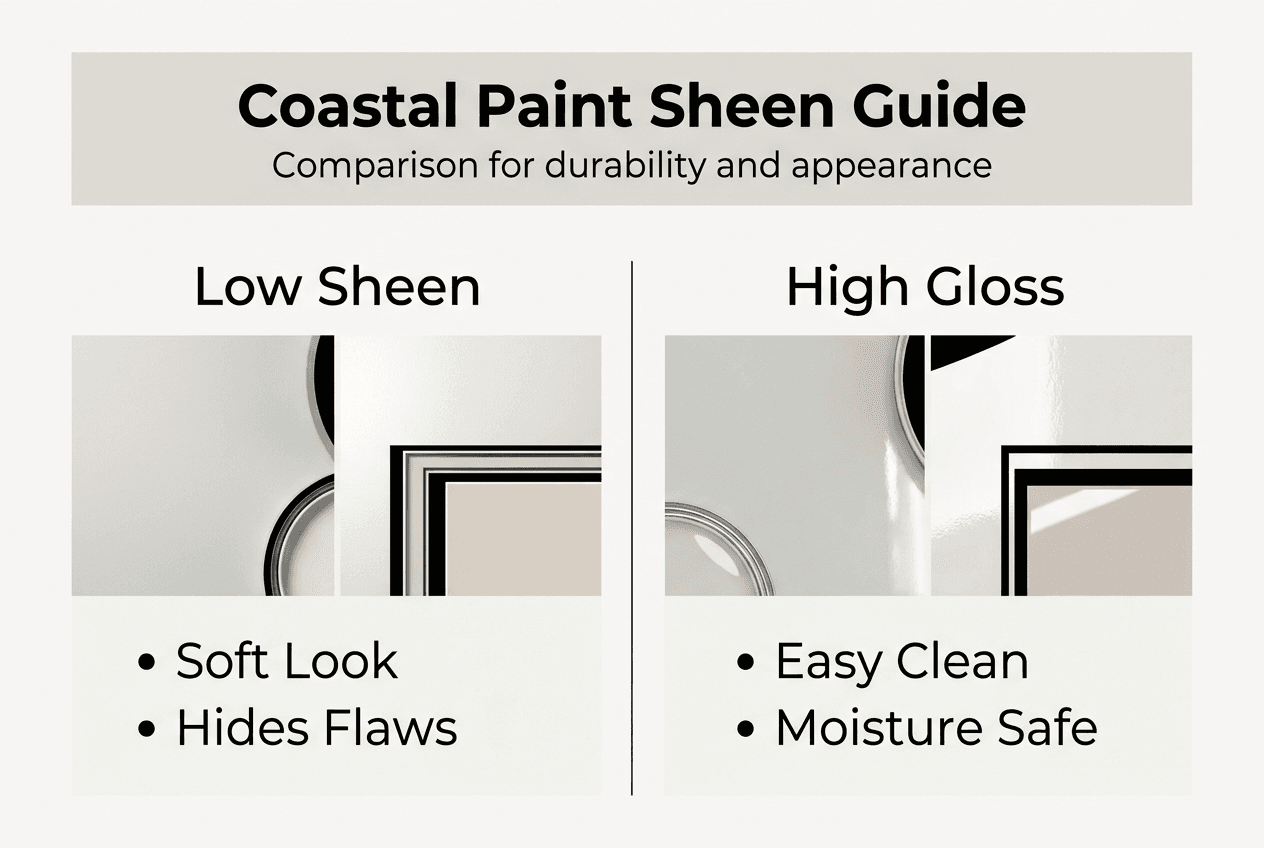
Selecting the optimal sheen requires balancing durability, aesthetics, maintenance, and cost. This comparison clarifies how each finish performs in coastal conditions:
| Sheen Type | Gloss % | Durability | Moisture Resistance | Cleanability | Flaw Hiding | Best Coastal Use |
|---|---|---|---|---|---|---|
| Flat/Matte | 0-10% | Low | Poor | Difficult | Excellent | Avoid in coastal areas |
| Low Sheen/Satin | 10-35% | Moderate-High | Good | Easy | Good | Exterior walls, interiors |
| Semi-Gloss | 35-70% | High | Excellent | Very Easy | Poor | Trim, doors, bathrooms |
| Gloss | 70-85%+ | Very High | Excellent | Very Easy | Very Poor | Cabinets, furniture |
Low sheen/satin is recommended for coastal interiors and exteriors as a balance of durability, aesthetics, and cleanability. It hides the minor imperfections common in older coastal homes while forming a tight enough surface to repel moisture and salt. Semi-gloss works beautifully on trim and doors where durability trumps flaw concealment, but higher sheen is superior for moisture/salt resistance yet highlights imperfections, with exterior semi-gloss preferred for trims.
Follow these steps to choose your ideal sheen:
- Assess exposure level by identifying which walls face ocean winds, receive direct salt spray, or stay damp from poor drainage.
- Define your aesthetic preference, weighing whether you prioritize a soft, elegant look or a crisp, modern finish.
- Evaluate maintenance willingness, since higher sheens clean easier but require more frequent washing to maintain appearance.
- Inspect surface condition, choosing lower sheens for walls with visible repairs or texture inconsistencies.
- Match sheen to room function, using higher gloss in wet areas like laundries and lower sheen in bedrooms or living spaces.
Pro Tip: Low sheen or satin finishes represent the sweet spot for most coastal homeowners. They deliver 80% of semi-gloss's durability while hiding 80% of the flaws that flat paint conceals, making them the most forgiving and practical choice for both interiors and exteriors.
Semi-gloss shines on architectural details. Window frames, fascia boards, and door trim benefit from its moisture resistance and easy cleaning. However, applying semi-gloss to large wall expanses in coastal homes often disappoints because it amplifies every ripple, patch, or repair. Flat finishes tempt budget-conscious homeowners with their smooth appearance, but they fail quickly in humid coastal climates, absorbing moisture and developing unsightly mold patches within months.
Before finalizing your choice, review NSW paint color and finish regulations to ensure compliance with local heritage or strata requirements. Professional Lake Macquarie painting services can guide you through these considerations. Additional perspectives on coastal paint finish pros and cons and coastal paint sheen expert advice offer valuable context for your decision.
Expert tips for selecting and maintaining paint finishes in coastal homes
Even the best paint finish fails without proper selection and maintenance. These strategies maximize your investment's lifespan and appearance:
- Clean exterior surfaces every 6 to 12 months using a garden hose or gentle pressure wash to remove salt buildup before it embeds in the paint film.
- Control interior moisture with exhaust fans in bathrooms and kitchens, preventing condensation that encourages mold growth even on higher sheen paints.
- Install UV-filtering window films or exterior shading on west and north-facing walls to reduce direct sun exposure and slow paint degradation.
- Schedule touch-up repainting every 5 to 7 years for high-exposure areas like eaves, window sills, and ocean-facing walls before damage spreads.
- Inspect annually for early warning signs such as chalking, cracking, or color fade, addressing issues immediately to prevent substrate damage.
Pro Tip: Surface preparation determines 70% of paint longevity. Pressure washing before painting removes contaminants that prevent adhesion, while proper priming seals porous substrates and creates a uniform base for topcoats. Skipping these steps voids most paint warranties and guarantees premature failure.
When selecting paint products, prioritize formulas explicitly rated for coastal conditions. Look for labels mentioning UV resistance, mold inhibitors, and salt tolerance. Premium brands often publish technical data sheets showing accelerated weathering test results, giving you confidence in real-world performance. Practical guides recommend low sheen/satin as balanced for coastal homeowners: durable, hides flaws, washable without glare.
Consulting professional painters familiar with Newcastle's microclimate pays dividends. Local experts understand which products perform best on fiber cement versus timber, how to detail flashings to prevent water intrusion, and when to apply coats for optimal curing. They also recognize site-specific factors like proximity to breaking surf, prevailing wind direction, and shading patterns that influence paint selection.
Your property's specific coastal exposure matters enormously. A home 500 meters inland faces different challenges than one directly on the beachfront. Windward walls require more robust protection than leeward sides. North-facing surfaces in the Southern Hemisphere receive intense UV but stay drier, while south-facing walls remain damp longer. Tailoring your finish selection to these variables, rather than applying a one-size-fits-all approach, dramatically improves outcomes.
For comprehensive preparation guidance, study the exterior paint coats guide to understand how coat quantity interacts with sheen selection. Explore practical paint finishing tips for additional maintenance strategies that extend your paint's protective life.
Professional painting services for coastal homes in Newcastle and surroundings
Achieving lasting results in coastal environments demands more than quality paint and the right sheen. It requires expertise in surface preparation, product selection, and application techniques specific to salt air and UV exposure. 4 Elements Painting specializes in coastal property painting across Newcastle, Maitland, Merewether, and Lake Macquarie, delivering durable finishes that withstand the region's harshest conditions. Our team understands which sheens perform best on different substrates and exposure levels, ensuring your investment protects and beautifies your home for years.

We offer comprehensive interior and exterior painting with personalized sheen recommendations based on your property's microclimate. From initial surface assessment through final coat application, we follow proven processes that maximize adhesion and longevity. Whether you need a complete exterior repaint in Maitland, specialized coastal home painting in Merewether, or expert painting services in Lake Macquarie, our coastal-adapted approach delivers results that resist peeling, fading, and mold growth. Contact us today for a detailed assessment and discover how proper finish selection transforms your coastal property's durability and curb appeal.
FAQ
What is the best paint finish for coastal environments?
Low sheen or satin finishes typically perform best in coastal environments due to their balance of moisture resistance and flaw concealment. They form tighter surface structures than flat paints, resisting salt embedding and moisture absorption while hiding minor wall imperfections that higher gloss finishes would highlight.
How often should I repaint my coastal home's exterior?
Repainting every 7 to 10 years represents typical intervals for coastal homes using quality paints and proper preparation. However, high-exposure areas like eaves and ocean-facing walls may require touch-ups every 5 to 7 years. Regular inspections catch early wear signs like chalking or cracking, allowing targeted maintenance that extends overall paint life. Following guidance in the exterior paint coats guide helps maximize durability between full repaints.
Does a higher gloss paint mean it is easier to clean?
Yes, higher sheen paints have better cleanability ratings compared to flat finishes because they form denser, less porous films that resist dirt and stain penetration. Salt residue and coastal grime wipe off semi-gloss and gloss surfaces far more easily than flat or matte paints. However, this advantage comes with the tradeoff of highlighting surface imperfections, requiring excellent substrate preparation before application.
Can I choose any paint finish or color for my coastal home in NSW?
Not always. Some strata schemes, heritage conservation areas, and local councils impose restrictions on exterior paint colors and finishes to maintain neighborhood character or historical accuracy. Review NSW paint color and finish rules before starting your project to avoid costly rework or compliance issues. Professional painters familiar with local regulations can guide you through approval processes and recommend compliant options that still meet your aesthetic and durability goals.