
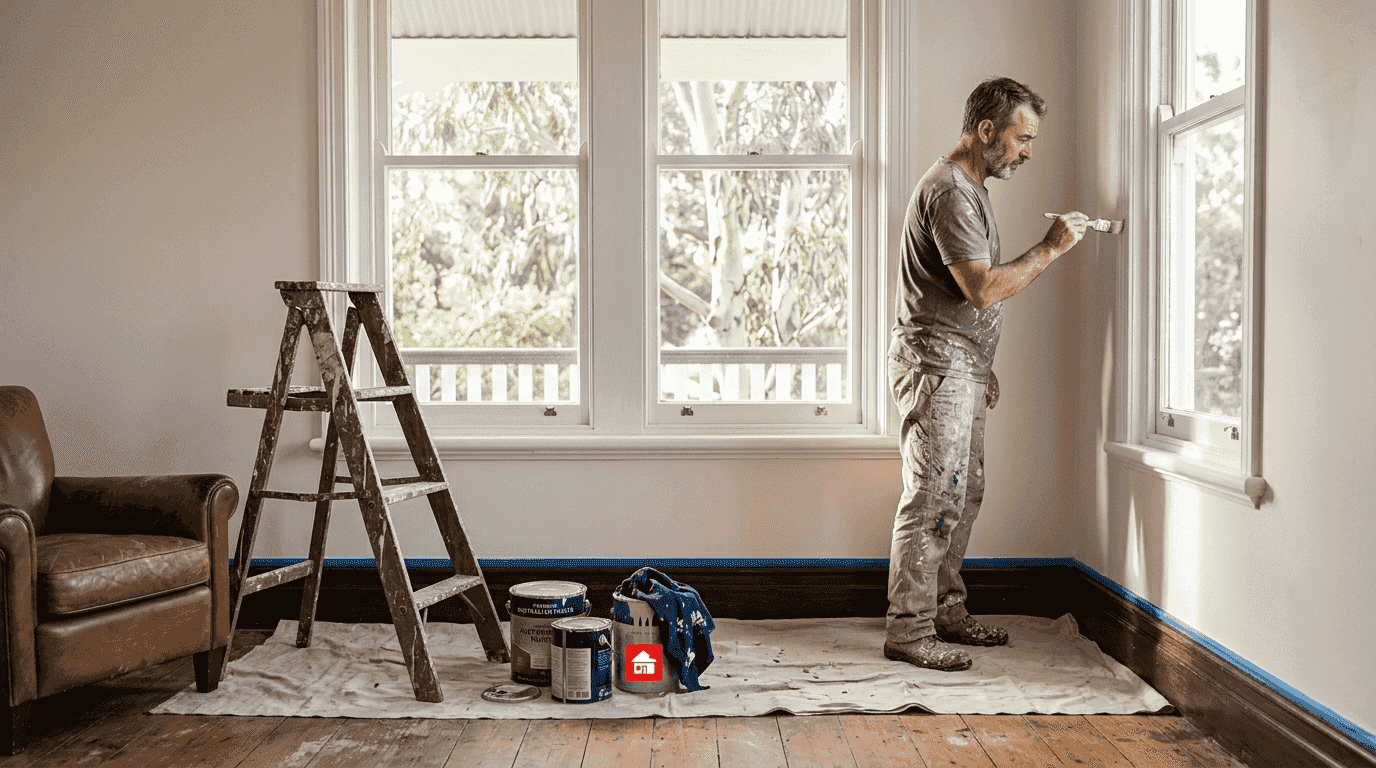
Many homeowners think interior painting is just rolling color onto walls, but it's far more intricate than that. Professional interior painting involves detailed surface preparation, strategic paint selection, and understanding how Australian environmental conditions affect durability and finish quality. This guide clarifies what interior painting truly entails, from preparation techniques to cost factors, helping you make informed decisions about paint types, professional services, and achieving lasting results for your residential or commercial space.
Table of Contents
- Understanding The Interior Painting Process
- Choosing The Right Paint And Finish For Australian Interiors
- Environmental And Cost Factors Affecting Interior Painting
- DIY Vs Professional Interior Painting: Pros, Cons, And Tips
- Professional Interior Painting Services Tailored For Australian Homes
- What Is Interior Painting FAQ
Key takeaways
| Point | Details |
|---|---|
| Preparation drives quality | Surface prep accounts for 60-80% of painting time and directly impacts adhesion and finish durability. |
| Primer is essential | Primer ensures proper paint adhesion, especially over oil-based paint, dark colors, and stained surfaces. |
| Environment matters | Temperature, humidity, and coastal conditions significantly affect paint curing, longevity, and performance. |
| Costs vary widely | Professional painting ranges $20-$60 per square meter, with labor representing 80-90% of total project costs. |
| Paint choice impacts results | Selecting appropriate paint type and sheen level affects durability, cleanability, and indoor air quality. |
Understanding the interior painting process
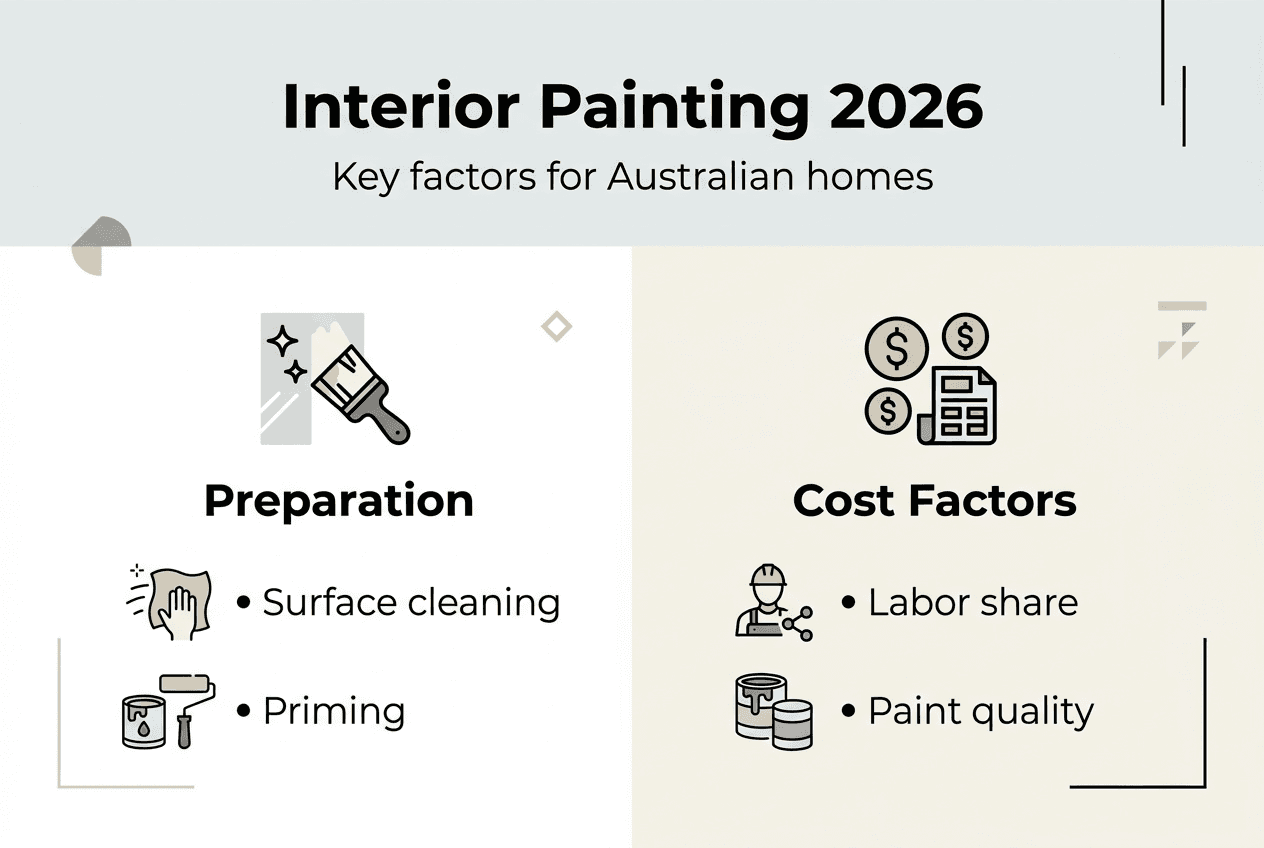
Having previewed key ideas, let's dive into what the interior painting process actually entails, focusing first on vital preparation steps. Thorough surface preparation is the foundation of successful interior painting, impacting adhesion and finish quality far more than most homeowners realize. Professional painters typically allocate 60-80% of their project time to preparation tasks rather than actual paint application.
Critical preparation tasks include several essential steps. Surface cleaning removes dust, grease, and contaminants that prevent proper paint adhesion. Sanding smooths rough areas and creates texture for better paint grip. Repairing holes, cracks, and imperfections ensures a flawless finished appearance. Applying pressure washing before painting helps remove stubborn dirt from walls and trim.
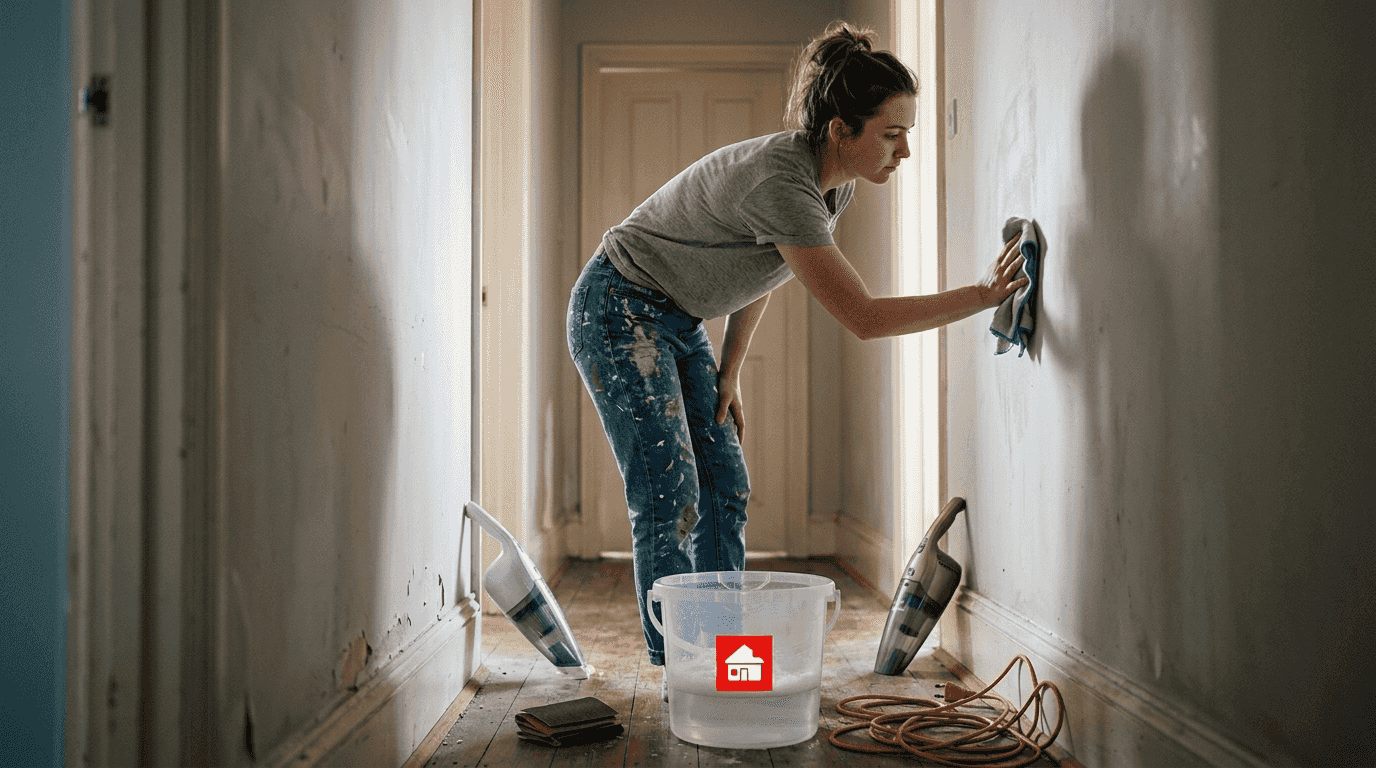
Primer application represents a vital step that many DIY painters skip, leading to disappointing results. Primer ensures proper adhesion, especially when painting over oil-based paint, transitioning from dark to light colors, or covering stained surfaces. It seals porous surfaces, blocks stains, and creates a uniform base for topcoat application. Without primer, you risk peeling, uneven coverage, and shortened paint lifespan.
Environmental factors must align before starting any interior painting project. Temperature should stay between 10-30°C for optimal paint curing. Humidity levels below 70% prevent moisture-related adhesion problems. Weather stability matters even for interior work, as extreme outdoor conditions affect indoor climate control. A well-prepped surface combined with ideal environmental conditions extends paint lifespan by years and delivers superior finish quality.
Pro Tip: Always test your primer and paint combination on a small, inconspicuous area first to verify adhesion and color accuracy before committing to entire walls or rooms.
Choosing the right paint and finish for Australian interiors
Having understood the painting process, let's explore how selecting the right paint type and finish impacts your interior's look and lifespan. Water-based acrylic and latex paints dominate interior applications due to fast drying times and low odor levels, making them ideal for walls and ceilings. These formulations clean up easily with water and emit fewer fumes during application.
Oil-based paints deliver superior durability and smooth finishes for trims, doors, and window frames. They resist wear better than water-based options and create harder, more durable surfaces. However, they require longer drying times, emit stronger odors, and need mineral spirits for cleanup. Most professionals recommend oil-based paints specifically for high-traffic woodwork and areas requiring frequent cleaning.
Sheen levels dramatically affect both appearance and cleanability, making house color and sheen selection crucial for different rooms. Matte finishes hide imperfections but show marks easily, suiting low-traffic areas like bedrooms. Satin sheens offer moderate durability and subtle shine, working well for living rooms and hallways. Semi-gloss finishes resist moisture and clean easily, making them perfect for kitchens, bathrooms, and trim work.
Low VOC paint options improve indoor air quality by reducing volatile organic compound emissions that cause odors and potential health concerns. Australian families increasingly prioritize these formulations, especially for bedrooms and spaces with limited ventilation. The initial cost premium pays dividends through healthier indoor environments and reduced chemical exposure.
Australian UV exposure and coastal conditions demand durable paint formulations engineered for harsh environments. Interior paints must withstand intense sunlight streaming through windows, particularly in north-facing rooms. Coastal properties face additional challenges from salt-laden air that penetrates indoor spaces, requiring specialized moisture-resistant formulations.
| Paint Type | Best Uses | Drying Time | Odor Level | Durability Rating |
|---|---|---|---|---|
| Water-based acrylic | Walls, ceilings | 1-2 hours | Low | Good |
| Oil-based enamel | Trims, doors, cabinets | 6-8 hours | High | Excellent |
| Low VOC latex | Bedrooms, nurseries | 1-3 hours | Very low | Good |
| Moisture-resistant | Bathrooms, kitchens | 2-4 hours | Low | Very good |
Pro Tip: Invest in premium paint for high-traffic areas like hallways and kitchens, where durability justifies the higher cost, but standard quality works fine for low-traffic bedrooms and closets.
Environmental and cost factors affecting interior painting
Understanding paint choices leads naturally to considering how environment and budget shape your painting project's success and costs. Environmental conditions like temperature and humidity affect paint curing and adhesion, making timing critical for Australian projects. Optimal conditions include temperatures between 10-30°C, humidity below 70%, and stable weather patterns that maintain consistent indoor environments.
Coastal properties throughout Newcastle, Central Coast, and Lake Macquarie regions face salt-laden air that accelerates paint degradation even indoors. Salt particles penetrate through windows and ventilation systems, attacking paint films and causing premature failure. Properties within 5 kilometers of coastline require specialized formulations designed to resist salt corrosion and moisture penetration.
High UV exposure in parts of Australia causes rapid fading and chalking, particularly affecting rooms with large windows or skylights. North-facing rooms receive intense, direct sunlight that breaks down paint pigments and binders over time. Window treatments help, but choosing UV-resistant paint formulations provides the best long-term protection for vibrant colors.
Labor typically accounts for 80-90% of professional painting costs, making it the major cost driver in any project. Material costs remain relatively stable, but skilled labor commands premium rates reflecting expertise, efficiency, and quality assurance. Price ranges vary from $20-$60 per square meter depending on paint quality, surface condition, and property size.
Property size significantly influences per-square-meter pricing, with larger projects benefiting from economies of scale. A single room costs more per square meter than painting an entire house due to setup time, equipment mobilization, and minimum service charges. Surface condition also affects pricing, as heavily damaged walls requiring extensive repair work increase labor hours substantially.
| Factor | Premium Paint Job | Budget Paint Job | 12-Year Cost Difference |
|---|---|---|---|
| Initial cost per sqm | $55 | $25 | $30 more upfront |
| Expected lifespan | 12-15 years | 5-7 years | Lasts 2x longer |
| Repaints needed | 0 | 1-2 | Saves $4,000-$8,000 |
| Total 12-year cost | $8,250 | $11,500 | $3,250 savings |
Professional painting services in Newcastle provide detailed quotes accounting for all cost factors, helping homeowners budget accurately. Transparent pricing includes surface preparation, materials, labor, and warranty coverage, eliminating surprise expenses mid-project.
Pro Tip: Schedule interior painting during mild weather months when you can open windows for ventilation without compromising temperature and humidity conditions needed for proper paint curing.
DIY vs professional interior painting: pros, cons, and tips
Having learned the environmental and cost factors, let's weigh whether DIY or hiring pros is suitable for your interior painting project. DIY painting offers creative control and budget flexibility, allowing homeowners to work at their own pace and make design decisions without external input. Personal satisfaction comes from completing a tangible home improvement project that transforms living spaces through your own effort.
DIY challenges require honest assessment of your skills, time availability, and patience for detailed work. Projects demand careful planning, quality surface preparation, and understanding of proper painting techniques to avoid costly mistakes. Rushing through preparation or using incorrect tools produces disappointing results that often require professional correction, ultimately costing more than hiring experts initially.
Professional services provide expertise and faster completion times, with experienced painters delivering high-quality finishes that DIYers struggle to match. Professionals bring specialized equipment, proven techniques, and warranties backing their work. They complete projects in days rather than weeks, minimizing household disruption and delivering consistent, durable results.
Professional benefits extend beyond speed and quality. Expert painters identify potential problems before they become expensive issues, recommend appropriate products for specific conditions, and ensure proper surface preparation that DIYers often underestimate. Professional painters in Maitland bring years of experience working with Australian climate challenges and local architectural styles.
DIY tips for successful interior painting start with thorough planning and realistic time estimates:
- Assess your walls honestly, identifying all repairs needed before purchasing any paint or supplies.
- Invest in quality brushes, rollers, and painter's tape rather than bargain tools that compromise results.
- Clear rooms completely or group furniture in centers covered with drop cloths for proper access.
- Apply primer to all surfaces unless using premium paint-and-primer combinations on previously painted walls.
- Work in sections, completing entire walls before breaks to avoid visible lap marks and uneven coverage.
- Maintain wet edges by working quickly and systematically, never allowing painted areas to dry partially before adjoining sections.
Common pitfalls include skipping primer to save time, rushing drying times between coats, and inadequate surface preparation. Each shortcut compromises final results and reduces paint longevity. Proper preparation and patience deliver professional-looking finishes that justify the time investment.
"Surface preparation is the single most critical step in any painting project. Ninety percent of paint failures trace back to inadequate prep work, not paint quality. Invest your time here, and the finish will take care of itself."
Pro Tip: If you choose DIY, tackle one room completely before starting another to build skills progressively and maintain motivation through visible completed successes rather than multiple half-finished projects.
Professional interior painting services tailored for Australian homes
Now that you understand the complexities and benefits of professional painting, here is how 4 Elements Painting can help deliver superior results for your home or business. Our expert interior painting services adapt specifically to Australian environmental demands, from coastal salt exposure to intense UV radiation that challenges standard paint applications.
Our professional painters in Maitland and surrounding regions specialize in detailed surface preparation, premium paint application, and weather-resistant finishes engineered for local conditions. We help homeowners and property managers achieve long-lasting, vibrant interiors that withstand Australia's demanding climate while maintaining beautiful aesthetics for years.
Our comprehensive services include thorough surface assessment, expert repair work, strategic primer application, and multiple topcoat layers using premium low-VOC formulations. We provide transparent quotes, flexible scheduling, and warranties backing our craftsmanship. Whether refreshing a single room or transforming an entire property, our team delivers consistent quality and professional results.
Expert guidance helps you navigate paint selection, color coordination, and finish choices tailored to each room's specific requirements. Our coastal home repainting services address unique challenges facing properties near the ocean, while our pressure washing before painting guide ensures optimal surface preparation for maximum paint adhesion and longevity.
"Professional experience makes the difference between a paint job that looks good initially and one that maintains its appearance for a decade or more. Proper preparation techniques and paint selection for local climates separate amateur work from professional results."
What is interior painting FAQ
What surface preparation is needed before interior painting?
Proper surface preparation includes cleaning walls to remove dust and grease, sanding rough areas smooth, filling holes and cracks with spackling compound, and applying primer to ensure paint adhesion. Skipping these steps leads to peeling, uneven coverage, and shortened paint lifespan.
How long does interior paint typically last in Australian homes?
Quality interior paint lasts 7-10 years in Australian homes with proper application and surface preparation, though high-traffic areas may need refreshing sooner. Coastal properties and rooms with intense sun exposure face accelerated degradation, reducing lifespan to 5-7 years without premium formulations.
What factors influence the cost of interior painting?
Labor represents 80-90% of painting costs, with pricing ranging $20-$60 per square meter based on property size, surface condition, paint quality, and project complexity. Larger projects benefit from lower per-square-meter rates, while extensive repairs or premium paints increase overall costs.
Is primer always necessary for interior painting?
Primer is essential when painting over oil-based paint, transitioning from dark to light colors, covering stained surfaces, or painting new drywall. It ensures proper adhesion, blocks stains, and creates uniform coverage, though premium paint-and-primer combinations may eliminate separate priming on previously painted surfaces in good condition.
Can I do interior painting myself or should I hire a professional?
DIY painting works for simple projects if you have time, patience, and basic skills, offering budget savings and creative control. Professional painters deliver faster completion, superior finishes, proper preparation techniques, and warranties, making them worthwhile for complex projects, time-sensitive renovations, or when quality and durability justify the investment.