
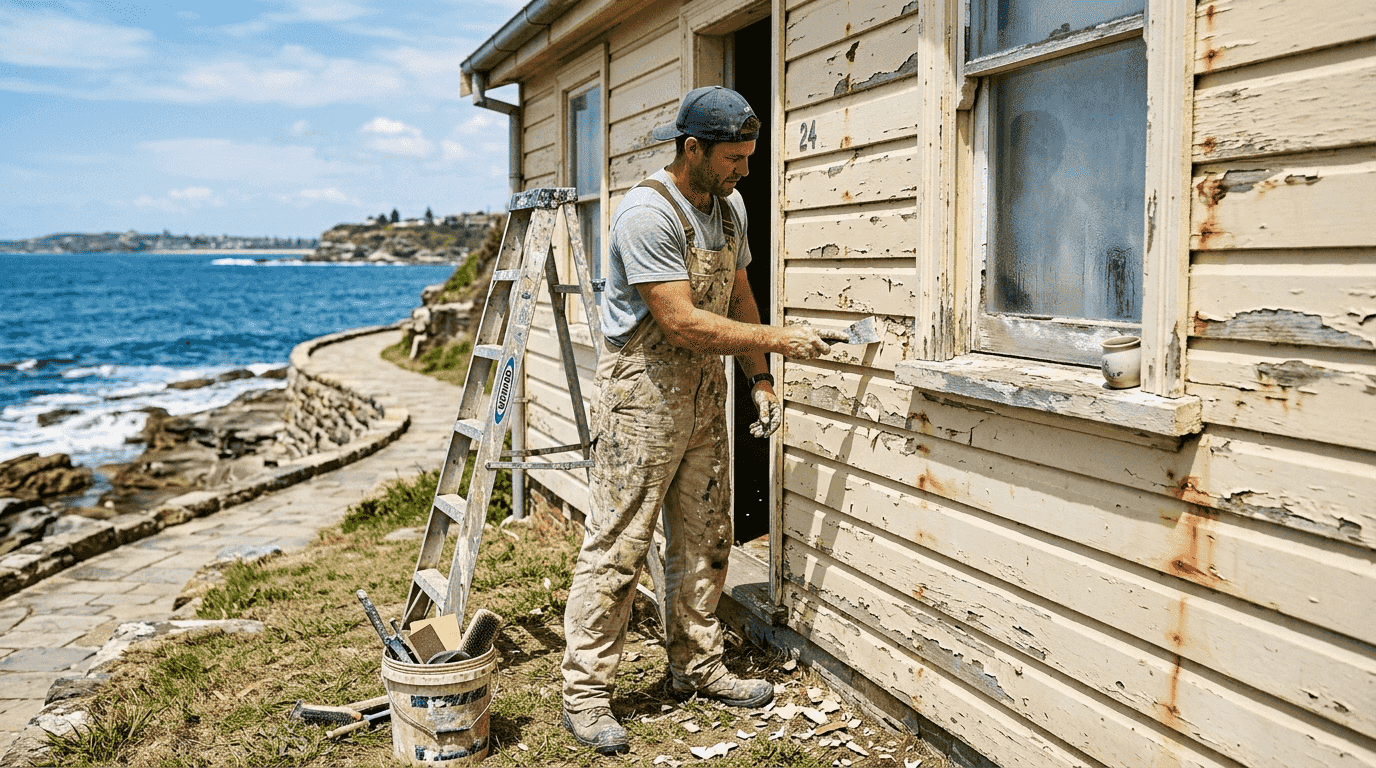
When paint fails on your Newcastle coastal home, there's an 80% chance inadequate surface preparation is the culprit. Many homeowners focus on choosing the perfect color while overlooking the foundation that determines whether that color lasts two years or twenty. Surface preparation isn't just cleaning. It's the difference between a coating that protects your investment and one that peels away with the next storm.
Table of Contents
- Understanding The Role Of Surface Preparation In Coastal Painting
- Common Methods And Challenges Of Surface Preparation
- Assessing And Preparing Your Home's Surface Before Painting
- Planning Your Coastal Painting Timeline For Best Results
- Professional Surface Preparation And Painting Services In Newcastle
- Frequently Asked Questions
Key takeaways
| Point | Details |
|---|---|
| Durability boost | Proper surface preparation extends paint lifespan by up to 50% in coastal environments. |
| Contaminant removal | Eliminating chlorides and salts is essential for coating adhesion and longevity. |
| Failure prevention | Skipping preparation causes 80% of paint failures on coastal homes. |
| Pre-paint assessment | Check for moisture, substrate damage, and old coating condition before starting. |
| Method selection | Choose cleaning and blasting techniques carefully to avoid damaging the substrate. |
Understanding the role of surface preparation in coastal painting
Your Newcastle home sits in one of the harshest environments for painted surfaces. Salt spray, intense UV radiation, and moisture-laden winds create a perfect storm for coating failure. Without proper surface preparation, even premium paints struggle to perform.
Coastal environments accelerate corrosion and moisture damage dramatically. Salt deposits penetrate porous surfaces and create osmotic pressure beneath paint films, leading to blistering and delamination. These aren't cosmetic issues. They're structural threats that compound over time.
Properly prepared surfaces can extend paint lifespan by up to 50% compared to unprepared ones. This isn't marketing spin. It's documented performance data from thousands of coastal projects. The preparation phase determines whether you repaint in five years or ten.
Moisture presents another critical challenge. Timber absorbs humidity, concrete wicks groundwater, and metal surfaces develop condensation. Painting over active moisture problems is throwing money away. The coating traps water inside, accelerating rot, rust, and delamination.
Pro Tip: Run your hand across the surface before painting. If it comes away chalky or dirty, you're not ready. That residue will prevent proper adhesion no matter how many coats you apply.
Surface assessment involves more than visual inspection. You need to check for:
- Visible damage like cracks, rot, or rust
- Chalking from UV degradation of old paint
- Timber soundness by pressing and tapping suspect areas
- Substrate moisture using a moisture meter
- Adhesion of existing coatings
These checks take time but save money. Finding problems after painting means starting over. Finding them during preparing house for exterior painting means fixing them once.
"Surface preparation accounts for 60-80% of total project success. Cut corners here and no amount of premium paint will save you." - Protective Coatings Industry Standard
Common methods and challenges of surface preparation
Surface preparation methods range from simple washing to aggressive mechanical removal. Each has specific applications, benefits, and risks. Choosing wrong costs time and damages substrates.
Pressure washing removes dirt, loose paint, and surface contaminants. It's effective for general cleaning but won't eliminate deeply embedded chlorides or firmly adhered old coatings. Water pressure must match substrate strength. Too much pressure damages soft timber or erodes mortar joints.
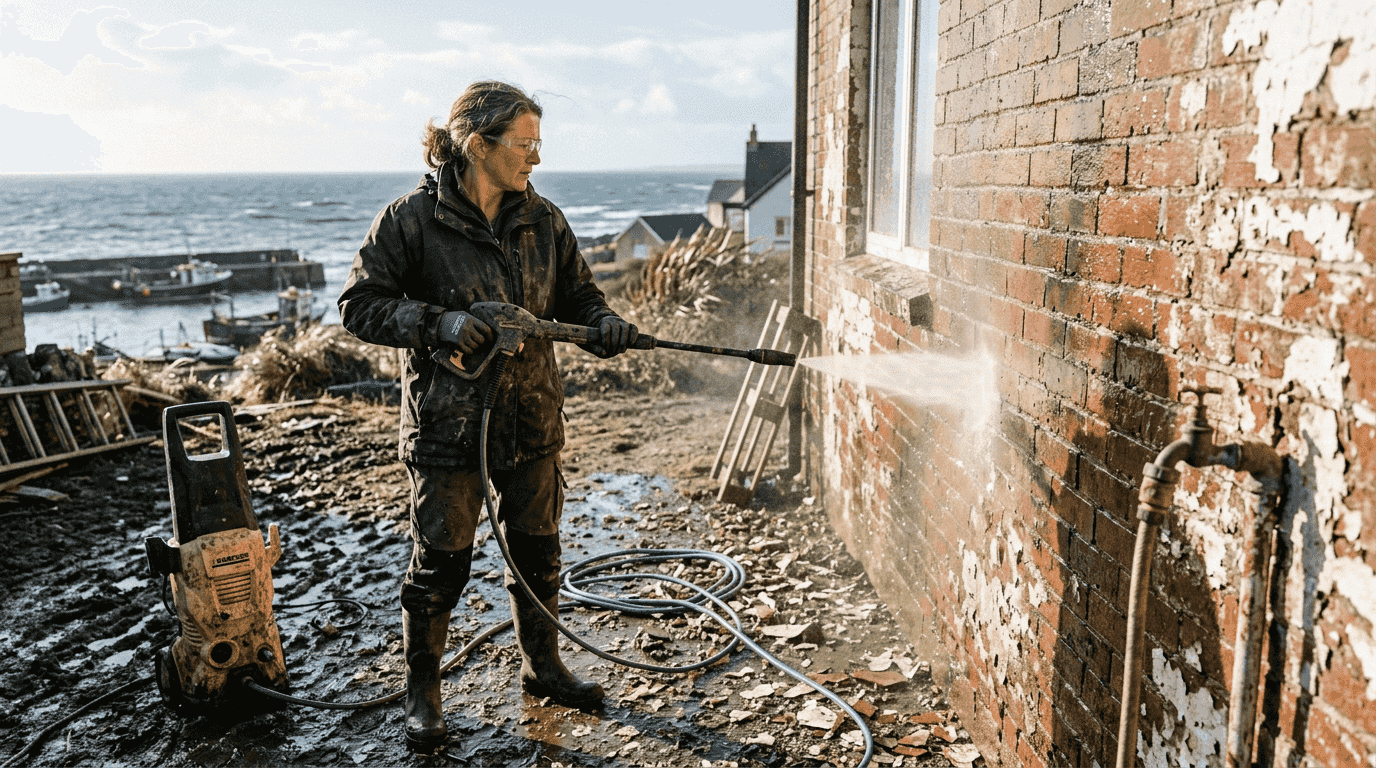
Pressure washing before painting provides a clean canvas but isn't always sufficient alone. Salt crystals penetrate deep into porous materials. Surface washing might remove visible deposits while leaving subsurface contamination that causes future failure.
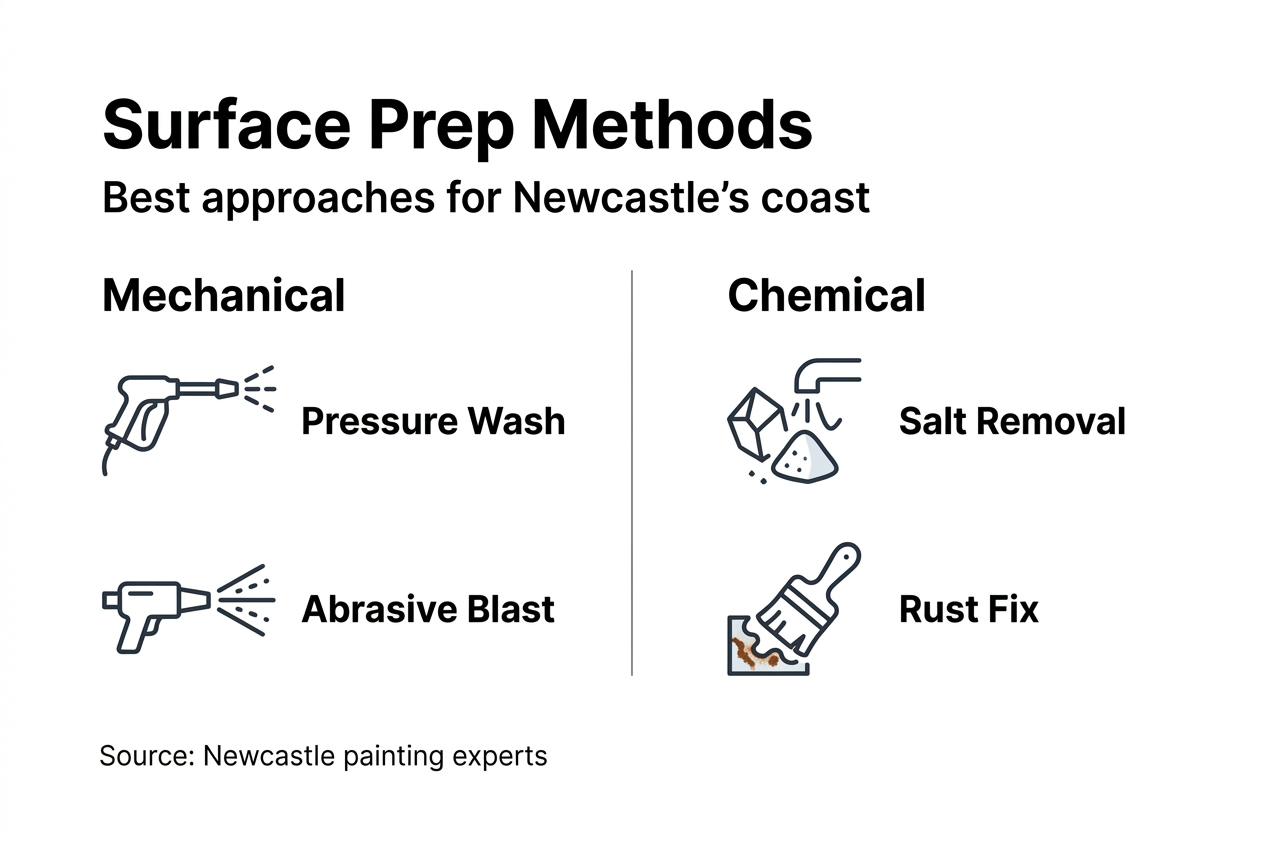
Abrasive blasting removes coatings, rust, and contaminants mechanically. Media options include sand, garnet, glass beads, and specialized materials. Using wrong abrasive or excessive blasting pressure can reduce coating adhesion by damaging the substrate profile. Too aggressive creates peaks and valleys that trap air. Too gentle leaves contaminants behind.
Chemical treatment addresses contaminants mechanical methods miss. Presence of chlorides and other contaminants significantly reduce adhesion even on apparently clean surfaces. Specialized cleaners neutralize salts and prepare surfaces at the molecular level.
| Method | Best For | Advantages | Limitations |
|---|---|---|---|
| Pressure Washing | General cleaning, loose paint removal | Fast, affordable, minimal equipment | Doesn't remove tight coatings or deep contaminants |
| Abrasive Blasting | Heavy rust, multiple coating layers | Complete removal, creates ideal profile | Risk of substrate damage, requires expertise |
| Chemical Cleaning | Salt contamination, metal prep | Removes molecular-level contaminants | Requires proper disposal, surface-specific formulas |
| Hand Sanding | Small areas, detail work | Precise control, minimal equipment | Labor-intensive, inconsistent on large areas |
Pro Tip: Test any preparation method on a small, inconspicuous area first. What works on one surface might damage another. A ten-minute test saves days of repair work.
Removing rust before painting metal surfaces requires complete elimination. Surface rust removal isn't enough. Pitting and scale must go down to sound metal. Any remaining corrosion continues spreading beneath new coatings.
Common preparation mistakes include:
- Rushing the cleaning process
- Using excessive pressure or aggressive media
- Skipping contaminant testing
- Painting before surfaces fully dry
- Ignoring manufacturer specifications for prep standards
Each mistake compounds. A surface that looks clean might harbor invisible problems. Professional assessment identifies issues before they become failures.
Assessing and preparing your home's surface before painting
Successful surface preparation follows a systematic approach. Skipping steps or rushing through creates weak points that fail under coastal exposure. Here's how Newcastle property managers and homeowners should proceed:
-
Inspect for water damage and structural issues. Walk the entire exterior looking for stains, soft spots, and deterioration. Push on timber to test soundness. Check for active leaks or drainage problems. Document everything with photos.
-
Test for chlorides and contaminants. Coastal homes accumulate salt even blocks from the beach. Professional testing identifies contamination levels. DIY kits provide basic screening. High readings require specialized cleaning before painting.
-
Clean thoroughly with appropriate methods. Start gentle and escalate as needed. Pressure wash to remove loose material. Apply chemical cleaners for salt removal. Use mechanical methods for stubborn coatings. Allow complete drying between steps.
-
Repair damage and prepare bare areas. Fill cracks and holes with appropriate materials. Replace rotted timber. Treat rust spots completely. Sand repairs smooth. Prime all bare or patched areas before topcoating.
-
Verify dryness before painting. Use a moisture meter on all surfaces. Timber should read below 15% moisture content. Concrete and masonry need weeks to dry after washing. Metal must be completely dry to prevent flash rusting.
Pro Tip: Schedule preparation in stages rather than rushing through in one weekend. Surfaces need drying time between cleaning and painting. Trying to compress the timeline guarantees problems.
Skipping primer on bare patches or painting over chalky surfaces leads to paint failure. Primer provides the mechanical bond between substrate and topcoat. On coastal homes, it also seals porous surfaces against moisture intrusion.
Different substrates require specific preparation approaches:
- Timber: Sand smooth, replace damaged sections, apply wood primer
- Metal: Remove all rust, degrease, apply metal primer
- Concrete/Masonry: Repair cracks, neutralize alkalinity, seal porous areas
- Previously painted: Remove loose coating, feather edges, spot prime bare areas
The exterior painting preparation guidance for Newcastle homes emphasizes addressing coastal-specific challenges. Generic preparation advice doesn't account for salt air and intense UV exposure.
"Proper preparation takes 70% of project time but determines 90% of coating performance. It's the most important phase you'll never see." - Industry Coating Standards
Planning your coastal painting timeline for best results
Timing matters as much as technique for coastal painting success. Newcastle's climate creates windows of opportunity and periods of risk. Understanding these patterns helps you schedule preparation and painting for optimal results.
Avoid painting during peak summer months when Australian summer conditions (UV, heat, humidity) can shorten working time and increase failure risk. Extreme heat causes paint to skin over before properly bonding. Intense UV degrades fresh coatings before they fully cure. High humidity extends drying times unpredictably.
Fall and spring provide ideal conditions. Moderate temperatures allow proper flow and leveling. Lower UV intensity lets coatings cure gradually. Reduced humidity permits consistent drying. These seasons offer the longest working windows and most predictable results.
Drying times require careful planning given Newcastle's variable coastal humidity. What cures in four hours inland might need eight hours near the water. Factor in:
- Substrate porosity and moisture content
- Ambient temperature and humidity
- Product-specific recoat windows
- Weather forecast stability
- Time of day and sun exposure
Pro Tip: Start exterior work in the morning when dew has evaporated but temperatures remain moderate. This maximizes working time before afternoon heat or evening moisture affects the coating.
Seasonal surface preparation and painting guidelines:
- Spring: Ideal for preparation work, moderate conditions support all methods
- Summer: Limit painting to early morning and evening, focus on prep during midday heat
- Fall: Best overall painting season, stable conditions and moderate temperatures
- Winter: Good for repairs and prep, paint only during warm, dry spells
Quick application becomes critical in variable weather. Once you start a section, complete it before conditions change. Partial coats that dry at different rates create lap marks and adhesion problems. Plan work in manageable sections you can finish in stable conditions.
Understanding how many coats exterior paint requires helps with timeline planning. Most coastal homes need primer plus two topcoats for adequate protection. Each coat requires appropriate drying time before the next. Rushing this process causes coating failure regardless of preparation quality.
Professional surface preparation and painting services in Newcastle
Surface preparation demands specialized knowledge, proper equipment, and years of experience. What looks straightforward becomes complex when dealing with coastal conditions and substrate variables. Mistakes during preparation create problems that emerge months later when repairs cost far more.

4 Elements Painting brings expertise specifically adapted to Newcastle's coastal environment. We understand how salt air affects different substrates. Our preparation protocols address contamination invisible to casual inspection. We use moisture meters, adhesion testers, and contamination analysis to verify readiness before painting begins.
Our professional painting services in Newcastle include comprehensive surface assessment and preparation. We identify problems, recommend solutions, and execute repairs to manufacturer standards. Every project receives the preparation its substrate and exposure require.
Whether you need complete exterior restoration or targeted repair, proper exterior painting preparation guidance prevents costly failures. We work throughout the region including Charlestown painting services where coastal exposure demands extra attention to preparation details. Contact us for assessment and quote on your project.
Frequently asked questions
What does surface preparation involve?
Surface preparation encompasses cleaning, repairing, and treating substrates before painting. This includes removing contaminants like salt and dirt, eliminating loose or failing coatings, repairing damage, and creating proper surface profile for adhesion. The specific steps vary by substrate type and condition but always aim to provide a clean, sound, dry surface for coating application.
Why is surface preparation so important for coastal homes?
Coastal environments expose painted surfaces to salt spray, high humidity, and intense UV radiation that accelerate coating failure. Salt penetrates porous substrates and creates osmotic pressure beneath paint films. Proper preparation removes these contaminants and creates conditions for maximum adhesion. Without it, even premium coatings fail prematurely through blistering, peeling, and delamination.
How do I know if my home's surface needs preparation before painting?
Run your hand across the surface. Chalky residue, dirt, or loose material indicates inadequate preparation. Look for peeling or bubbling paint, rust stains, water damage, or soft spots in timber. Check moisture levels with a meter. Any of these signs mean the surface needs work before painting. Professional assessment identifies problems not visible to untrained eyes and prevents painting over hidden issues.
Can I do surface preparation myself or should I hire a professional?
Basic cleaning and minor repairs suit DIY efforts if you have time and proper equipment. However, assessing contamination levels, selecting appropriate methods, and avoiding substrate damage require experience. Coastal homes face unique challenges that generic advice doesn't address. Professionals have specialized equipment, testing capability, and knowledge to prepare surfaces correctly. Poor preparation wastes money on paint that fails early.
How long does surface preparation take for a typical coastal home?
Preparation typically requires 60-70% of total project time. A standard home might need three to five days for thorough cleaning, repair, and drying before painting begins. Complex issues like extensive rust, multiple coating layers, or significant damage extend this timeline. Rushing preparation to start painting sooner guarantees problems. Proper exterior painting preparation guidance emphasizes adequate time for each step including complete drying between phases.