
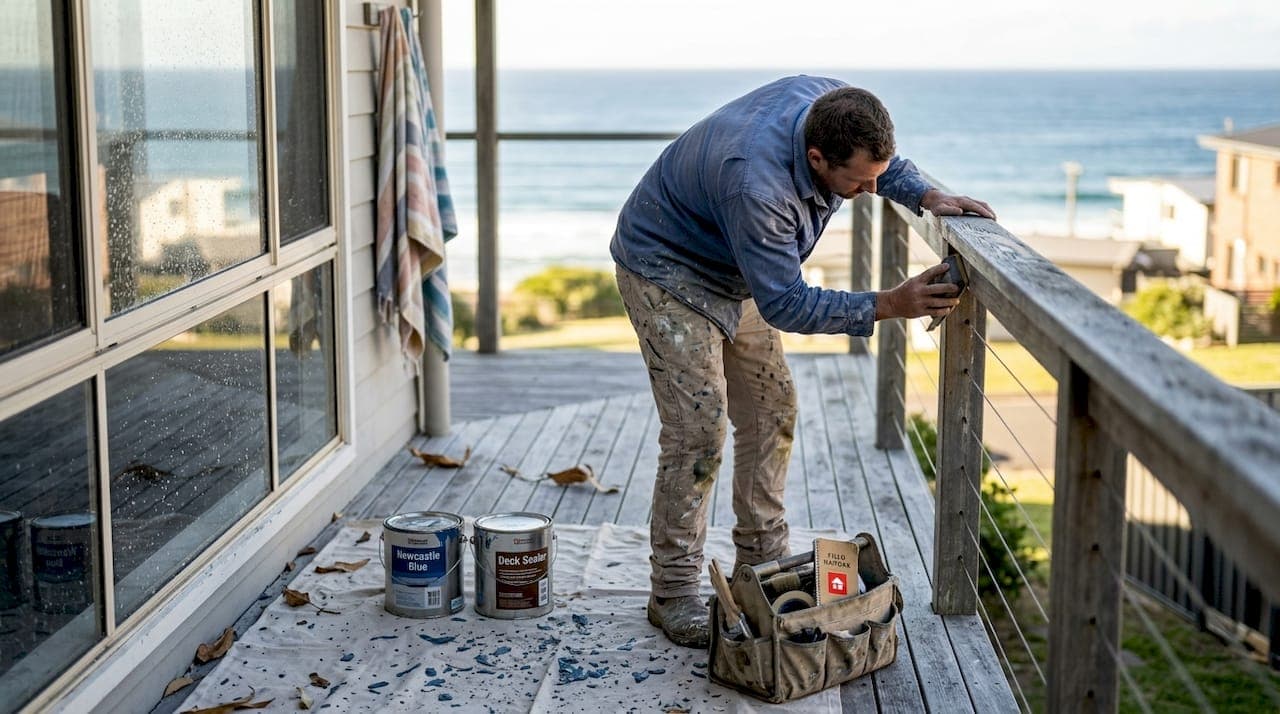
Coastal homes in Newcastle and surrounding regions face relentless environmental assault from salt spray, intense UV radiation, and high humidity that can destroy even premium paint within three years if applied incorrectly. Many property owners discover too late that choosing painters unfamiliar with marine conditions leads to peeling, chalking, and costly emergency repaints. Local painters who specialize in coastal environments understand how to select weather-resistant coatings, time projects around humidity cycles, and prepare surfaces to withstand the harshest ocean exposure. This guide reveals why regional expertise matters, the technical standards that protect your investment, and practical steps to maximize paint durability in challenging coastal climates.
Table of Contents
- Key takeaways
- Understanding coastal painting challenges in Newcastle and surrounding regions
- How local painters follow Australian standards for superior weather-resistant finishes
- Why choosing national or non-local painters risks premature failures and higher long-term costs
- Practical tips to maximize your coastal home's paint lifespan with local professionals
- Partner with trusted local painters for your Newcastle coastal property
- Frequently asked questions
Key Takeaways
| Point | Details |
|---|---|
| Local coastal expertise | Choosing painters who understand Newcastle's salt spray, humidity cycles, and UV exposure yields longer lasting coatings. |
| Standards ensure durability | AS/NZS 2312.1 based methods with proper surface preparation and coatings provide 10 to 15 year protection in marine environments. |
| Surface preparation matters | Thorough cleaning, dew point aware scheduling, and correct surface prep prevent coating failures in coastal climates. |
| Hybrid paints benefit | Hybrid oil and water based formulations blend adhesion and UV resistance for timber and metal in coastal settings. |
| Warranty backed local service | Property managers benefit from warranties and proven coastal painting expertise from local specialists. |
Understanding coastal painting challenges in Newcastle and surrounding regions
Newcastle's coastal environment creates unique painting challenges that demand specialized knowledge and techniques. Salt spray carried by ocean winds deposits corrosive particles on exterior surfaces, accelerating coating breakdown and metal corrosion. Moisture levels fluctuate dramatically between day and night, creating dew conditions that interfere with paint adhesion if application timing isn't carefully managed. These factors combine to create one of Australia's most demanding painting environments.
UV radiation especially affects north-facing walls causing faster fading and chalking, which signals urgent repaint needs to prevent underlying rot. South-facing walls experience different challenges, retaining moisture longer and promoting mold growth if coatings lack proper anti-fungal additives. East and west exposures receive intense morning and afternoon sun respectively, creating thermal cycling that stresses paint films.
Humidity and dew point critically influence painting success. Winter months in coastal NSW often see humidity levels above 85%, creating surface condensation that prevents proper paint curing. Experienced local painters in Lake Macquarie monitor weather forecasts and use dew point meters to schedule work during optimal conditions, typically spring and autumn when humidity remains moderate and temperatures stable.
Different building materials require tailored approaches:
- Weatherboard timber needs flexible coatings that move with wood expansion and contraction
- Render surfaces demand breathable paints that allow moisture vapor escape while blocking liquid water
- Metal substrates require specialized primers that prevent galvanic corrosion in salt-laden air
- Brick and masonry benefit from penetrating sealers before topcoat application
Hybrid oil/water-based paints optimize adhesion and flexibility for timber and metal in coastal environments, combining oil's penetration with water-based technology's UV resistance. These advanced formulations have revolutionized coastal home repainting in Merewether and similar exposed locations.
"The combination of salt, UV, and moisture creates a perfect storm for paint failure. Without proper surface preparation and climate-appropriate coatings, even expensive paints won't last half their expected lifespan in coastal zones."
How local painters follow Australian standards for superior weather-resistant finishes
Professional coastal painters adhere to rigorous technical standards that ensure long-lasting protection. AS/NZS 2312.1 methodologies such as Sa 2½ blast cleaning, zinc-rich epoxy primers, and polyurethane topcoats achieve 10-15 year durability in harsh coastal zones. These standards provide detailed specifications for surface preparation, coating selection, and application techniques tailored to marine environments classified as C4 or C5 corrosivity categories.
Surface preparation follows a stepwise process that determines coating success:
- Initial assessment identifies existing coating condition, substrate type, and contamination levels
- Pressure washing removes salt deposits, chalk residue, and loose material using 3000+ PSI equipment
- Blast cleaning (for metal) or mechanical abrasion (for masonry) creates the anchor profile needed for primer adhesion
- Dew point monitoring ensures surface temperature remains at least 3°C above dew point during application
- Final inspection confirms cleanliness standards meet Sa 2½ (near-white metal) or equivalent specifications
Proper prepping coastal homes for painting requires understanding how environmental conditions affect each preparation step. Morning dew can re-contaminate cleaned surfaces within hours, necessitating same-day coating application after prep work completes.
Primer selection varies by substrate and exposure:
| Substrate type | Recommended primer | Key benefit |
|---|---|---|
| Steel/metal | Zinc-rich epoxy | Cathodic protection against corrosion |
| Timber | Oil-modified alkyd | Deep penetration and flexibility |
| Render/masonry | Acrylic sealer | Moisture vapor permeability |
| Previously painted | Bonding primer | Adhesion to aged coatings |
Zinc-rich epoxy primers protect steel substrates through sacrificial corrosion, where zinc oxidizes preferentially to the underlying metal. This electrochemical protection continues even if the topcoat becomes damaged, providing insurance against premature failure.
Topcoat systems for C5 marine zones typically include multiple layers. A mid-coat provides additional barrier protection and builds film thickness, while the final topcoat contains UV-resistant pigments that prevent fading and chalking. Polyurethane topcoats offer superior gloss retention and chemical resistance compared to standard acrylics, justifying their higher cost through extended service life.
Scheduling painting projects requires careful weather analysis. Pressure washing before painting must occur during dry periods when surfaces can fully dry before coating. Winter months pose particular challenges, as humidity often exceeds safe application thresholds even on sunny days. Spring and autumn provide the most reliable weather windows.
Pro Tip: Request dew point data logs from your painter showing conditions during application. Reputable contractors document environmental conditions to verify compliance with manufacturer specifications and ensure warranty validity.
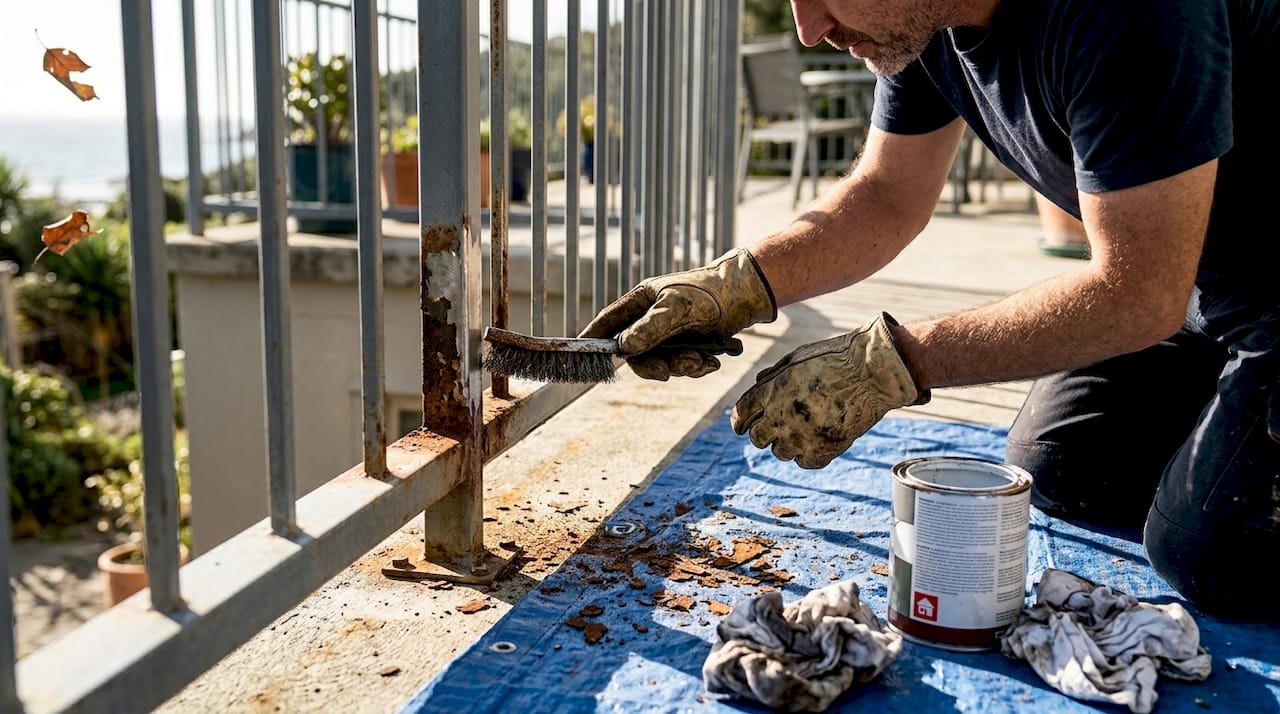
Rust removal before painting metal surfaces cannot be compromised. Even minor rust bloom under new paint will continue spreading, eventually causing coating failure. Complete removal to bare metal, followed immediately by primer application, prevents flash rusting in coastal humidity.
Why choosing national or non-local painters risks premature failures and higher long-term costs
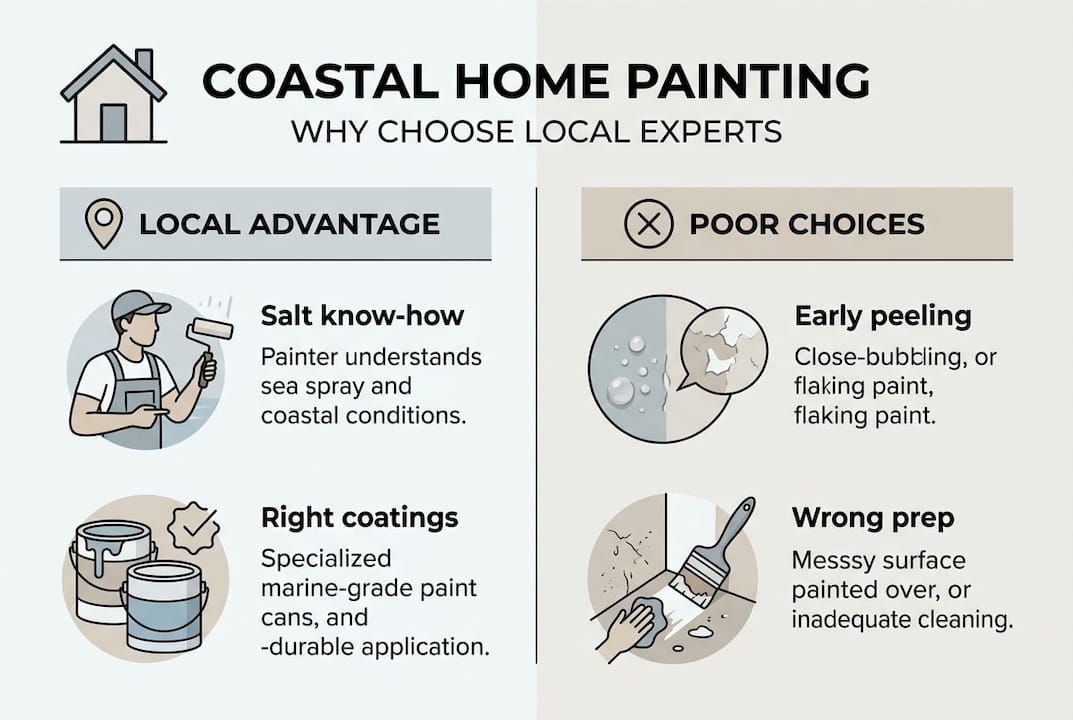
National painting franchises operate on standardized systems designed for efficiency across diverse markets. While this approach works reasonably well in temperate inland areas, national painters often use standardized pricing and methods that fail to consider local coastal microclimates, causing early peeling and costly repaints. Their crews may lack experience with the specific challenges Newcastle's marine environment presents.
Generic painting approaches create multiple failure points:
- Using inland-rated paint systems instead of C5 marine-grade coatings
- Inadequate surface preparation that misses salt contamination
- Scheduling work during unsuitable weather without dew point monitoring
- Applying uniform coating thickness regardless of exposure orientation
- Missing substrate-specific primer requirements for coastal conditions
These oversights manifest as visible failures within 18 to 36 months. Peeling typically begins at edges and joints where moisture penetrates, then spreads across entire surfaces. Chalking appears as a powdery residue that rubs off on your hand, indicating UV degradation of the binder. Both conditions require complete coating removal and reapplication, doubling your total investment.
Local painters bring irreplaceable advantages. Their reputation depends entirely on community satisfaction, creating powerful accountability that national chains lack. When problems arise, you can visit their office, speak with owners directly, and leverage local business networks for resolution. This accessibility proves invaluable during warranty claims or when unexpected issues emerge.
Local painters in Charlestown understand microclimate variations even within small geographic areas. Properties near the beach face more intense salt exposure than homes just two kilometers inland. North-facing walls on hilltop locations experience different UV intensity than valley properties. This granular knowledge allows precise coating system selection.
Warranty-backed services from established local businesses provide genuine protection. National franchises may offer impressive-sounding warranties, but enforcement becomes problematic when the local franchise changes ownership or closes. Regional contractors with decades of local operation have strong incentives to honor commitments and maintain their hard-earned reputations.
"We've repainted dozens of homes where national companies used standard exterior paint instead of marine-grade systems. The owners paid premium prices but got inland-quality results that failed in our coastal climate. Choosing experienced local contractors costs less over the property's lifetime."
Total lifecycle costs favor local expertise despite potentially higher initial quotes. A proper C5-rated system installed by knowledgeable painting services in Maitland contractors lasts 12 to 15 years, while generic approaches often fail by year three. Dividing total cost by service years reveals the local option delivers superior value, not to mention avoiding the disruption and inconvenience of premature repainting.
Practical tips to maximize your coastal home's paint lifespan with local professionals
Protecting your coastal property investment requires proactive maintenance and smart decision-making throughout the painting process. These actionable strategies help homeowners and property managers extend coating life and avoid premature failures.
- Schedule regular pressure washing every 12 to 18 months to remove salt deposits and chalk residue before they penetrate the coating film
- Choose C5-rated paints with anti-mould and UV-resistant pigments specifically formulated for marine environments
- Plan painting projects for mild weather windows in spring or autumn when humidity remains moderate and temperatures stable
- Monitor north-facing and west-facing walls annually for early chalking or fading that signals approaching maintenance needs
- Work with experienced local contractors who document surface preparation and environmental conditions during application
- Request detailed specifications showing primer type, coat thickness, and topcoat system matched to your substrate and exposure
Regular pressure washing serves dual purposes. It removes harmful contaminants that accelerate coating breakdown while allowing early detection of problems like chalking, peeling, or substrate damage. Catching issues early enables targeted repairs instead of complete repainting, saving thousands of dollars.
Paint selection demands careful consideration beyond color and sheen. C5-rated systems incorporate specialized resins and pigments that withstand marine exposure. UV-resistant pigments prevent the fading and chalking common in coastal sunlight, while anti-mould additives combat the fungal growth encouraged by high humidity. These premium formulations cost more initially but deliver dramatically longer service life.
Timing projects around weather patterns separates successful coastal painting from premature failures. Avoid winter months when humidity regularly exceeds 85% and dew point conditions persist through midday. Summer heat can cause rapid drying that traps solvents and creates adhesion problems. Spring and autumn offer the most reliable conditions, though individual days require verification through dew point measurement.
Surface monitoring helps you stay ahead of maintenance needs. Chalking appears gradually, starting as slight dustiness and progressing to heavy powder that rubs off easily. Catching it at the light stage allows cleaning and recoating just the affected areas. Waiting until heavy chalking develops usually requires complete coating removal and reapplication. Similarly, small areas of peeling can be spot-repaired if addressed quickly, but widespread peeling demands full surface treatment.
Documentation protects your investment. Reputable contractors provide detailed specifications showing exactly what products were applied, how many coats, and what environmental conditions existed during application. This information proves essential for warranty claims and helps future contractors understand your coating system when maintenance becomes necessary. Photos of surface preparation stages verify that proper procedures were followed.
Pro Tip: Create a simple maintenance log tracking when painting occurred, products used, and annual inspection notes. This record helps you budget for future work and provides valuable information when selling your property or filing insurance claims for storm damage.
Understanding proper exterior paint coats for coastal conditions prevents under-specification that leads to early failure. Most marine environments require a minimum of one primer coat plus two topcoats to achieve adequate film thickness. Some highly exposed areas benefit from an additional mid-coat between primer and topcoat, building total dry film thickness to 200+ microns.
Real-world results demonstrate these principles. This coastal repaint case study shows how proper preparation and product selection delivered lasting protection in one of Newcastle's most exposed locations. The property remained in excellent condition after eight years, while neighboring homes using standard approaches required repainting within four years.
Partner with trusted local painters for your Newcastle coastal property
Protecting your coastal investment demands more than generic painting services. You need specialists who understand Newcastle's unique marine environment and apply proven techniques that deliver lasting results. 4 Elements Painting brings decades of coastal painting expertise to residential and commercial properties throughout the region, combining rigorous Australian standards with deep local knowledge.
Our team specializes in C5 marine-rated coating systems tailored to your property's specific exposure and substrate requirements. We follow AS/NZS 2312.1 guidelines for surface preparation, primer selection, and topcoat application, ensuring your paint investment delivers maximum durability. Every project includes detailed documentation of products used, application conditions, and warranty coverage for your peace of mind.

Whether your property sits in Charlestown, along the Lake Macquarie shoreline, or in coastal Merewether, our local expertise ensures coatings that withstand salt spray, UV radiation, and humidity cycles year after year. We time projects around optimal weather conditions, use dew point monitoring during application, and select products specifically rated for marine environments. Contact us today to discuss how professional coastal painting protects your property value and eliminates the frustration of premature paint failures.
Frequently asked questions
How often should I repaint my coastal home in Newcastle?
Typically every 10 to 15 years with proper C5-rated systems and regular maintenance like pressure washing to remove salt deposits. However, early repainting becomes necessary if chalking or fading appears on north-facing or highly exposed walls. Monitoring your coating condition annually helps you catch problems before they require complete surface repainting, potentially extending your maintenance cycle through targeted touch-ups.
What makes local painters better suited than national chains for Newcastle properties?
Local painters understand Newcastle's unique coastal conditions and adapt preparation methods, product selection, and application timing accordingly. They offer community-based accountability with direct owner access and genuine warranty support, unlike standardized national services that may use inland-rated products unsuitable for marine environments. Regional contractors build their reputation on long-term results in harsh coastal conditions, creating powerful incentives to specify appropriate coating systems and follow rigorous preparation standards.
How do local painters prepare surfaces to resist coastal corrosion?
Surface preparation includes pressure washing to remove salt and chalk, blast cleaning for metal surfaces to achieve Sa 2½ standards, and applying zinc-rich epoxy primers that provide cathodic protection. These steps ensure proper primer adhesion while protecting against corrosion in C4 and C5 marine zones. Experienced contractors also monitor dew point during application to prevent moisture contamination that compromises coating adhesion, and they time projects during optimal weather windows when humidity remains moderate.
Can I customize paint colors for my coastal home?
Yes, you can customize colors extensively, but you must consider NSW strata and heritage regulations that may restrict exterior color choices in certain areas or building types. Local painters guide you through compliance requirements while helping you achieve desired aesthetics using marine-grade products available in thousands of custom colors. They understand which pigments offer superior UV resistance in coastal sunlight, ensuring your chosen colors remain vibrant for years rather than fading within the first few seasons.