
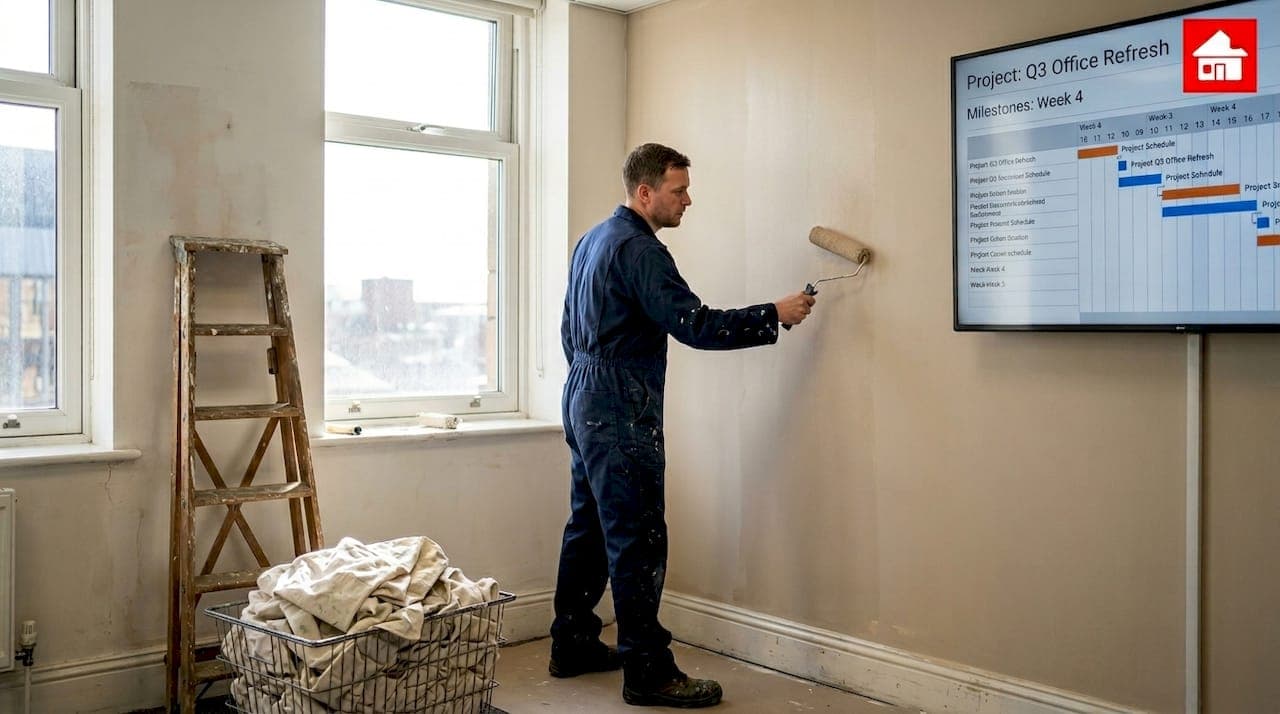
Many business owners assume commercial painting is just residential painting on a larger scale. In reality, commercial painting is the professional application of protective and decorative coatings to non-residential properties with emphasis on durability and minimal disruption. For Newcastle and Central Coast commercial properties, this specialized service addresses unique coastal challenges like salt corrosion, moisture damage, and strict regulatory compliance. This guide covers everything you need to know: scope, methodologies, costs, repaint cycles, and specialized considerations for protecting your commercial investment in harsh coastal environments.
Table of Contents
- Key takeaways
- What is commercial painting? Defining scope and significance
- Core commercial painting methodologies and standards
- Cost benchmarks and typical repaint cycles for Newcastle commercial properties
- Coastal environment challenges and specialized painting considerations
- Professional commercial painters in Newcastle and Central Coast
- FAQ
Key Takeaways
| Point | Details |
|---|---|
| Definition and scope | Commercial painting covers nonresidential properties with durable coatings and minimal disruption, focusing on protection and appearance. |
| Core methodologies and standards | The process includes surface assessment, preparation, priming, multiple coat application, inspections, and phased scheduling to limit disruption. |
| Coastal challenges | In Newcastle and Central Coast, salt air and moisture demand specialized coatings and surface prep to protect assets. |
| Costs and cycles | Coastal Newcastle properties often face higher material and labor costs, with repaint cycles driven by environmental exposure and regulatory requirements. |
| Management tips | Plan around business hours, choose coatings designed for harsh coastal environments, and verify contractor credentials and safety plans to minimize disruption. |
What is commercial painting? Defining scope and significance
Commercial painting is the professional application of protective and decorative coatings to non-residential properties with emphasis on durability and minimal disruption. This specialized service applies to diverse property types where appearance, protection, and operational continuity matter equally. Understanding what qualifies as commercial painting helps you recognize when you need specialized expertise rather than standard residential services.
Commercial properties requiring professional painting include:
- Office buildings and corporate headquarters
- Retail stores and shopping centers
- Warehouses and distribution facilities
- Schools and educational institutions
- Hospitals and medical facilities
- Multi-tenant residential complexes
- Restaurants and hospitality venues
- Industrial facilities with moderate exposure
The distinction from residential painting extends beyond property size. Commercial projects demand rigorous scheduling to minimize business disruption, often requiring night or weekend work. You face stricter compliance requirements, safety protocols, and durability standards. Industrial painting involves even harsher exposures like chemical resistance and extreme temperatures, while commercial painting balances protection with aesthetic appeal.
Commercial painters address multiple surface types across your property. Interior surfaces include walls, ceilings, trim, and specialized finishes for lobbies or conference rooms. Exterior work covers building facades, architectural features, signage areas, and weather-exposed structural elements. Floor coatings like epoxy systems protect high-traffic areas in warehouses or retail spaces. Metal surfaces including railings, doors, and structural steel require anti-corrosion treatments.
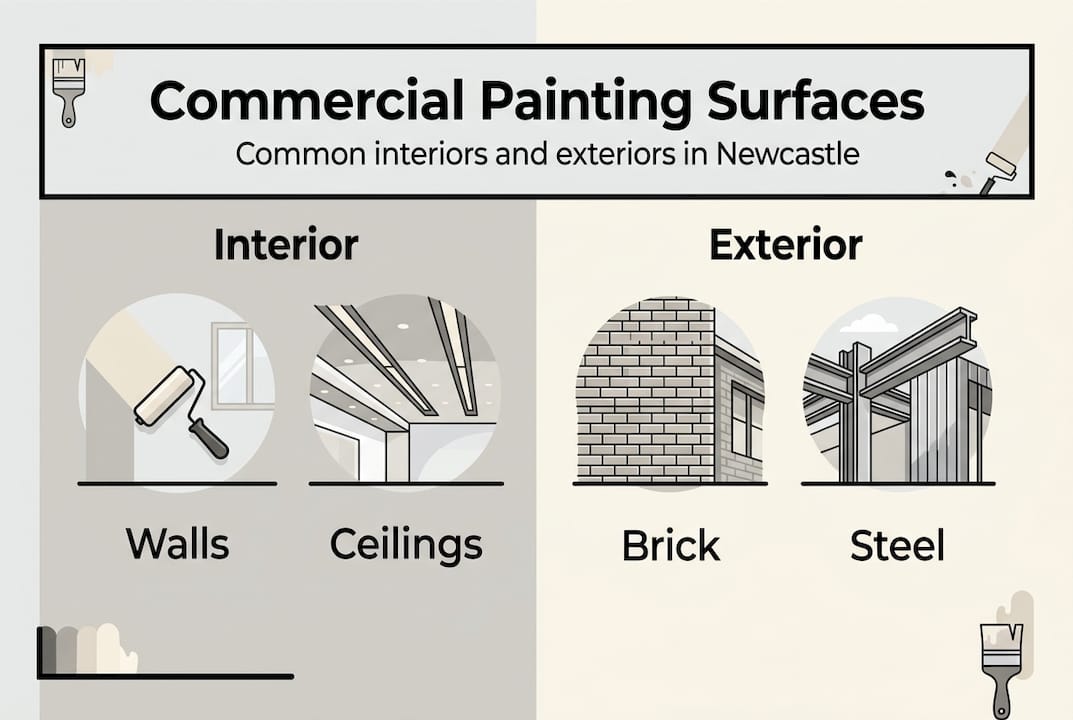
For Newcastle and Central Coast properties, coastal location adds complexity. Salt-laden air accelerates paint degradation and metal corrosion. Moisture from ocean fog penetrates surfaces, causing premature failure if improper coatings are used. Your commercial painting services must account for these environmental factors to deliver lasting protection. Regulatory compliance becomes critical when dealing with lead paint in older commercial buildings or VOC restrictions in enclosed spaces.
Durability drives commercial painting specifications. You need coatings that withstand constant use, cleaning, and environmental exposure while maintaining professional appearance. This requires higher-grade materials, more thorough surface preparation, and application expertise that residential projects rarely demand.
Core commercial painting methodologies and standards
Core methodologies include surface assessment, preparation, priming, multi-coat application, inspection, and phased scheduling to reduce disruption. Professional commercial painters follow systematic processes ensuring quality, compliance, and minimal impact on your operations. Understanding these steps helps you evaluate contractors and set realistic project expectations.
The commercial painting process follows six essential phases:
-
Surface assessment evaluates existing conditions including moisture content, adhesion quality, substrate integrity, and hazardous materials like lead paint. Contractors use moisture meters and adhesion testing to identify problem areas requiring special treatment.
-
Preparation removes failing coatings and contaminants through pressure washing before painting, scraping, or abrasive blasting. SSPC-SP6 commercial blast cleaning removes all visible rust, mill scale, and old coatings, leaving a clean surface profile for optimal adhesion.
-
Priming applies specialized undercoats matched to substrate and exposure conditions. Coastal properties need anti-corrosion primers on metal and moisture-blocking primers on masonry to prevent salt and water infiltration.
-
Multi-coat application builds protective film thickness through multiple layers with specified dry times between coats. SSPC-PA1 standards govern coating thickness, uniformity, and quality control through mil gauge measurements.
-
Inspection by certified personnel verifies coating thickness, coverage, color accuracy, and surface finish before final acceptance. This quality control step catches defects before they become expensive problems.
-
Phased scheduling coordinates work around your business hours, completing sections sequentially to maintain access and minimize tenant disruption.
SSPC-SP6 commercial blast cleaning standard ensures surfaces reach cleanliness level suitable for protective coatings in normal atmospheric exposure. This removes all rust, mill scale, and previous coatings through abrasive blasting, leaving a uniform gray or better surface profile. For harsher coastal exposures, SSPC-SP10 near-white blast cleaning provides superior surface preparation.
SSPC-PA1 shop, field, and maintenance painting standard specifies coating application requirements including surface preparation verification, environmental conditions during application, film thickness measurement, and quality acceptance criteria. Following this standard ensures your coating system performs as designed.
Pro Tip: Schedule painting phases during off-business hours or weekends to protect operations and keep tenants satisfied. Night work costs more upfront but eliminates revenue loss from business interruption.
These rigorous professional steps deliver longevity and compliance essential for coastal commercial properties. Proper exterior painting preparation prevents premature coating failure that would require expensive repaints. Quality methodologies cost more initially but reduce total ownership cost through extended service life and fewer maintenance cycles.
Cost benchmarks and typical repaint cycles for Newcastle commercial properties
Typical Newcastle costs range $40-100/m² interior, $70-100/m² exterior, with repaint cycles every 3-7 years depending on exposure. Understanding regional pricing and maintenance intervals helps you budget accurately and plan projects without surprises. Coastal environment and property usage patterns significantly influence both costs and repaint frequency.
Newcastle commercial painting costs vary by project complexity, surface condition, access difficulty, and coating specifications. Interior painting typically ranges $40 to $100 per square meter depending on surface preparation needs, ceiling height, and finish quality. Exterior painting costs $70 to $100 per square meter reflecting additional weatherproofing requirements and access equipment. Hourly rates for commercial painters run $65 to $140 including labor, materials, and equipment.
Project scale dramatically affects total investment:
| Property Type | Typical Size | Cost Range | Repaint Cycle |
|---|---|---|---|
| Small retail shop | 100-200 m² | $6,000-$12,000 | 3-5 years interior, 5-7 years exterior |
| Medium office | 300-500 m² | $15,000-$30,000 | 4-6 years interior, 6-8 years exterior |
| Large warehouse | 1,000-2,000 m² | $40,000-$100,000 | 5-7 years interior, 7-10 years exterior |
| Multi-story commercial | 2,000+ m² | $80,000-$200,000+ | 3-5 years high-traffic, 6-8 years standard |
Repaint intervals depend heavily on coastal exposure and usage intensity. Exterior surfaces facing direct salt spray need repainting every 5 to 7 years even with quality coatings. Protected exteriors under eaves or facing away from prevailing winds may last 8 to 10 years. High-traffic interior areas like lobbies, hallways, and retail spaces require repainting every 2 to 3 years to maintain professional appearance. Standard office interiors last 4 to 6 years between repaints.
Several factors influence both costs and repaint frequency:
- Coastal salt and moisture exposure accelerating degradation
- Traffic intensity causing wear and soiling
- Surface preparation quality affecting coating adhesion
- Coating grade and specification determining durability
- Building orientation and weather exposure patterns
- Maintenance practices like regular cleaning
Investing in quality coastal-suitable coatings delivers superior cost-benefit over time. Premium exterior systems cost 20 to 30 percent more initially but extend service life by 40 to 60 percent compared to standard products. For a $30,000 exterior project, spending an extra $6,000 on superior coatings that last 9 years instead of 6 years saves $18,000 in avoided repaints over 18 years.
Your exterior painting cost guide provides detailed breakdowns for specific property types. Commercial and strata painting services offer specialized solutions for multi-tenant properties where coordinated scheduling and minimal disruption matter most. Planning repaint cycles proactively prevents emergency projects at premium pricing when coating failure threatens property value or tenant satisfaction.
Coastal environment challenges and specialized painting considerations
Coastal salt and fog require anti-corrosion primers; lead paint and VOC regulations mandate strict compliance. Newcastle and Central Coast commercial properties face unique technical and regulatory challenges demanding specialized expertise. Understanding these factors helps you select qualified contractors and specify appropriate coating systems for lasting protection.
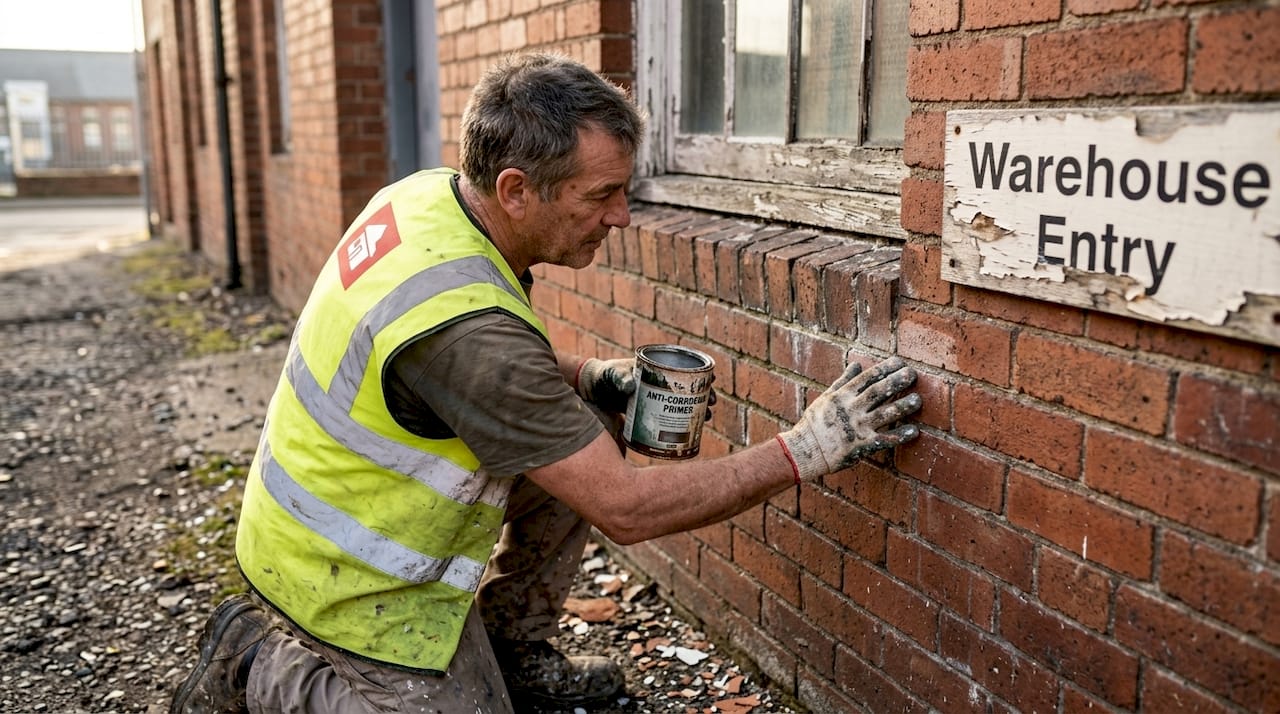
Coastal environments accelerate paint degradation through multiple mechanisms. Salt-laden air deposits chlorides on surfaces, attracting moisture and promoting metal corrosion beneath coatings. Ocean fog maintains high humidity levels that prevent proper drying and encourage mildew growth. UV radiation intensifies near water, breaking down paint binders and causing chalking or fading. Wind-driven sand and debris abrade surfaces, wearing through protective films prematurely.
Surface preparation standards vary based on exposure severity. SSPC-SP6 commercial blast cleaning suits normal atmospheric conditions, removing visible rust and mill scale to create clean surfaces. For harsh marine environments with direct salt spray, SSPC-SP10 near-white blast cleaning provides superior preparation by removing nearly all contaminants and creating deeper anchor profiles for coating adhesion.
| Standard | Cleanliness Level | Suitable Exposure | Cost Impact |
|---|---|---|---|
| SSPC-SP6 | Commercial blast, all rust/scale removed | Normal atmospheric, protected coastal | Baseline |
| SSPC-SP10 | Near-white blast, 95% contaminant removal | Direct marine, severe coastal | 30-50% higher |
Regulatory compliance adds complexity to commercial painting projects. Lead paint in buildings constructed before 1978 requires containment, worker protection, and proper disposal per OSHA 29 CFR 1926.62 standards. Contractors need EPA Lead-Safe certification and must follow strict protocols preventing lead dust contamination. VOC regulations under EPA 40 CFR 59 limit volatile organic compound content in architectural coatings to reduce air pollution, requiring low-VOC or zero-VOC products in many applications.
"Coastal commercial painting demands rigorous surface preparation meeting SSPC standards and strict compliance with lead paint and VOC regulations. Contractors lacking this expertise deliver substandard results requiring premature repaints, ultimately costing property owners far more than hiring qualified professionals initially."
Hazardous material handling requires specialized training and equipment. Abrasive blasting creates dust containing lead, silica, and other toxins requiring respiratory protection, containment systems, and environmental monitoring. Disposal of contaminated materials follows EPA hazardous waste protocols with documentation and licensed facilities. Your contractor must carry appropriate insurance and certifications for this work.
Pro Tip: Choose qualified contractors familiar with coastal regulations and surface prep standards to ensure long-lasting results. Request documentation of EPA Lead-Safe certification, SSPC training, and environmental compliance procedures before awarding contracts.
Coating selection critically impacts performance in coastal conditions. Standard acrylic latex paints fail quickly under salt exposure. You need specialized systems with anti-corrosion primers, moisture-resistant intermediates, and UV-stable topcoats formulated for marine environments. Rust removal before painting prevents corrosion from continuing beneath new coatings. Following exterior paint coats guidance ensures adequate film thickness for coastal protection.
Environmental monitoring during application prevents coating failure. Temperature and humidity must fall within specification ranges for proper curing. Dew point calculations prevent moisture condensation on surfaces during application. Wind speed limits ensure proper atomization and prevent overspray. Professional contractors use environmental monitoring equipment and postpone work when conditions fall outside acceptable ranges.
Professional commercial painters in Newcastle and Central Coast
Protecting your commercial property investment requires specialized expertise in coastal painting challenges and regulatory compliance. 4 Elements Painting delivers comprehensive commercial and strata painting services tailored to Newcastle and Central Coast business properties. Our team understands the unique demands of salt exposure, moisture management, and operational continuity that coastal commercial projects require.

We handle every aspect from thorough surface preparation through final inspection, following SSPC standards and environmental regulations. Our services include anti-corrosion treatments, moisture-resistant coating systems, interior and exterior projects, and flexible scheduling minimizing disruption to your operations. We coordinate work around your business hours, completing projects in phases that maintain access for tenants and customers. Our pressure washing services ensure proper surface cleanliness before coating application.
Our coastal expertise extends throughout the region. Whether you operate in Newcastle, Lake Macquarie, or Central Coast areas, we deliver solutions engineered for local environmental conditions. Our painting services in Maitland and surrounding areas provide the same rigorous standards and attention to detail. Contact us for expert consultation tailored to your commercial painting needs and discover how proper coastal-adapted painting protects your property value while enhancing professional appearance.
FAQ
Is commercial painting different from residential painting?
Yes, commercial painting involves significantly larger scale, stricter compliance standards, and scheduling designed to minimize business disruption. While residential projects prioritize aesthetics and homeowner preferences, commercial work must meet regulatory requirements, withstand harsher use conditions, and maintain operations during execution. Commercial painters use industrial-grade materials, follow SSPC standards, and coordinate complex logistics that residential projects rarely require.
How often should commercial properties in coastal areas be repainted?
Coastal commercial exteriors typically require repainting every 5 to 7 years due to accelerated degradation from salt and moisture exposure. High-traffic interior areas need repainting every 2 to 3 years to maintain professional appearance and protective qualities. Actual intervals vary based on coating quality, surface preparation thoroughness, exposure severity, and maintenance practices. Premium coastal-formulated systems extend these cycles by 30 to 50 percent compared to standard products.
What standards ensure quality commercial painting projects?
SSPC-SP6 surface preparation standard and SSPC-PA1 coating application standard ensure commercial painting quality and durability. SSPC-SP6 specifies cleanliness levels for surfaces before coating, while SSPC-PA1 governs application procedures, film thickness, and quality acceptance criteria. Following these industry standards protects your investment by ensuring coatings perform as engineered, reducing premature failures and extending service life. Qualified contractors document compliance through inspection reports and thickness measurements.
What coating systems work best for Newcastle coastal commercial properties?
Coastal commercial properties need multi-layer systems with zinc-rich or epoxy anti-corrosion primers, moisture-resistant epoxy or polyurethane intermediates, and UV-stable acrylic or polyurethane topcoats. These systems provide layered protection against salt, moisture, and UV degradation that standard latex paints cannot withstand. Proper specification matches coating chemistry to substrate type and exposure severity, with harsher locations requiring more robust systems. Professional contractors select products proven in marine environments rather than general-purpose architectural coatings.
How do you minimize business disruption during commercial painting?
Phased scheduling coordinates painting around your operational needs, completing sections sequentially while maintaining access to other areas. Night and weekend work eliminates disruption during business hours, though at premium rates. Temporary barriers and ventilation systems isolate work zones, controlling dust and odors. Clear communication with tenants and customers about schedules and access routes prevents confusion. Professional contractors develop detailed logistics plans addressing your specific operational requirements before starting work.